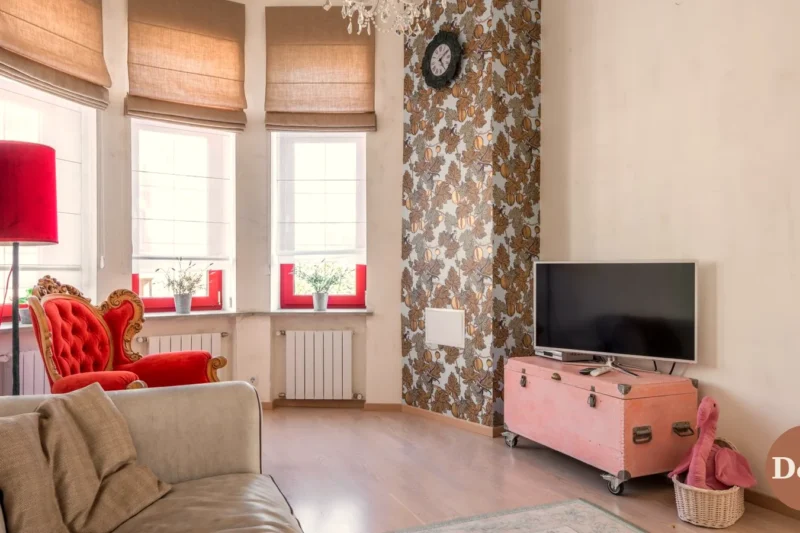
How to Mix Patterns in Home Decor: 3-Pattern Formula
In this article
- 1. The 3-pattern formula: one hero, three scales
- 2. Go bold with one large-scale pattern
- 3. Mix stripes with geometry
- 4. Small prints are the glue
- 5. Try it with your hands first — swatches
- 6. Style a whole room
- What it costs: budget bands
- Pattern mixing mistakes to avoid
- Frequently asked questions
- How many patterns can you mix in one room?
- What is the easiest pattern to mix?
- Do all patterns need the same colors?
- Can you mix florals with geometrics?
- How do you test patterns before buying?

How to mix patterns in home decor is the question that stops most people at the cushion aisle. The fear is real — too many patterns and the room looks like a fabric shop exploded. But the rule is simple, and it is the same one textile designers use: printed patterns fall into four families — floral, geometric, world cultures, and conversational. The trick is not avoiding patterns; it is giving them a shared color and different scales. Here is the formula, then six steps that use it.
1. The 3-pattern formula: one hero, three scales

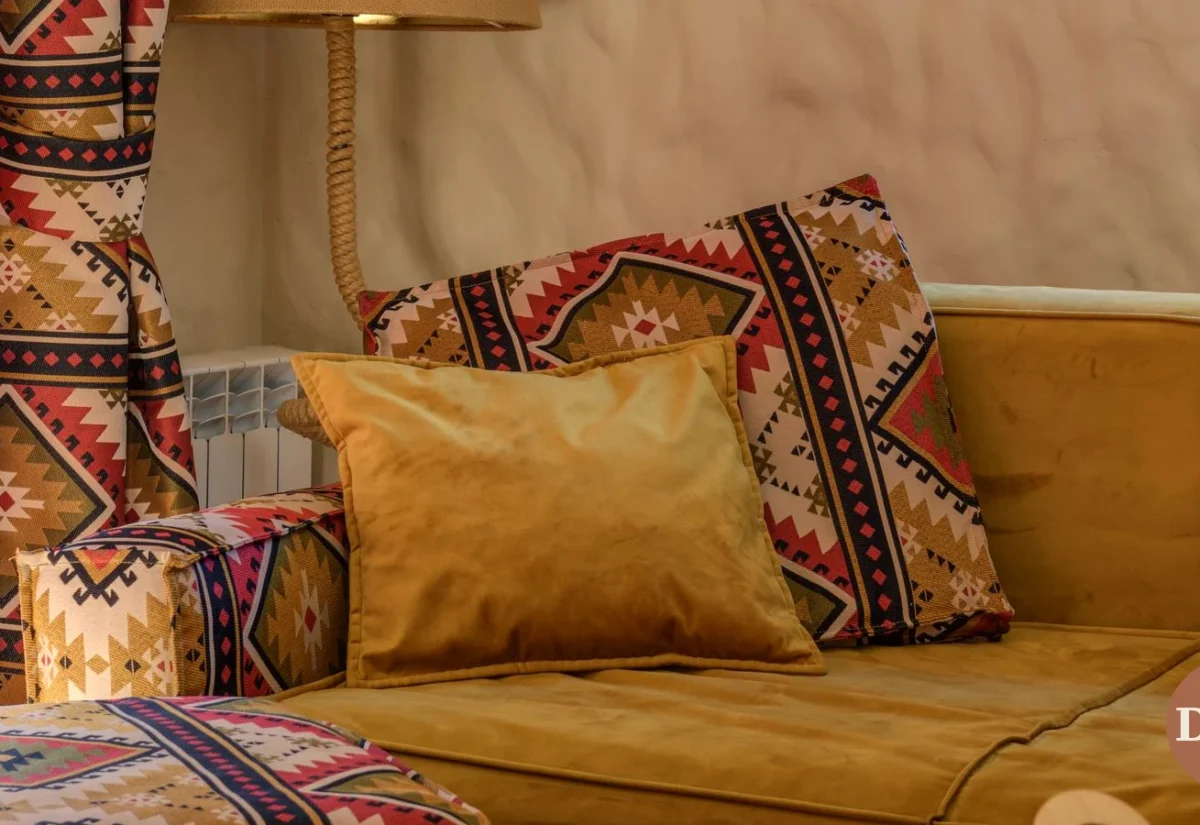
The idea: the photo says it all: a mustard solid cushion, a black tone-on-tone damask cushion, a tan woven lumbar, and a bold striped throw — three pattern scales in one frame, held together by a mustard/black/cream palette. That is the formula: one hero pattern (the boldest), one medium, one small — in 2–3 shared colors — with more solids than prints.
How to do it: pick your hero first — the boldest pattern in the room (a rug, curtains, or wallpaper). Then add a medium pattern at half its scale and a small one at a quarter. Keep 2–3 colors shared across all three, and make at least half the textiles solid. If it still looks busy, remove one pattern, not one color.
2. Go bold with one large-scale pattern
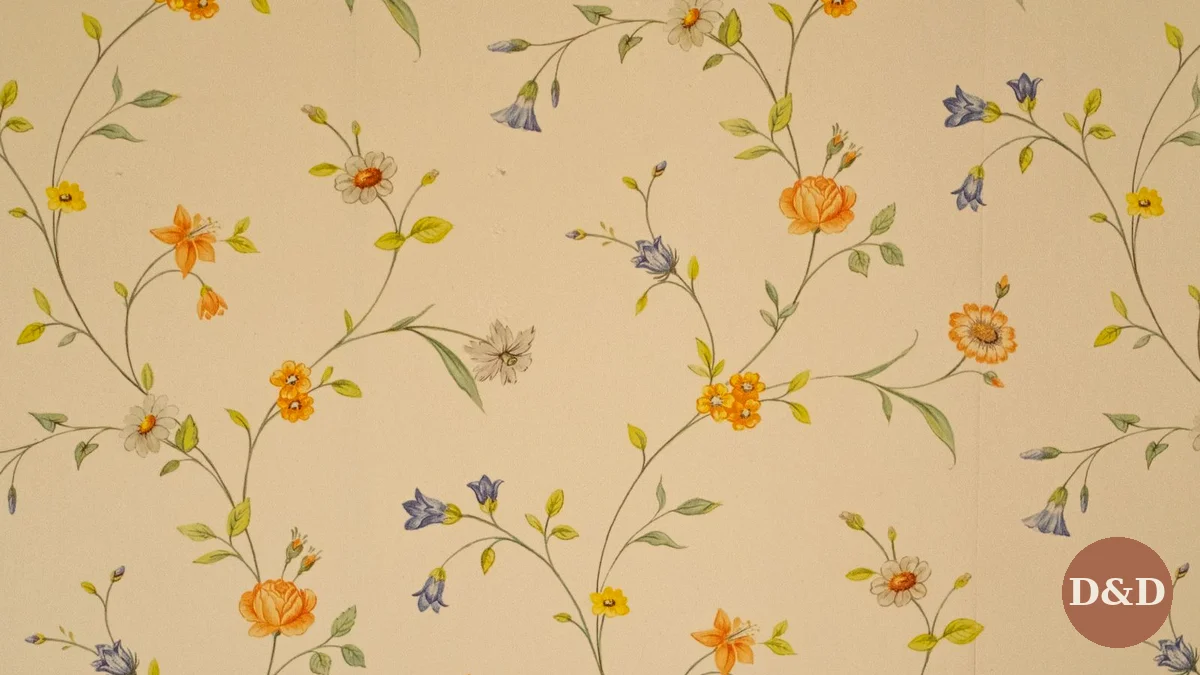
The idea: the large-scale floral wallpaper in the photo — orange roses, blue bellflowers, yellow daisies on cream — is the hero. One large-scale pattern is what makes a room look designed instead of decorated: it sets the color palette and the mood, and everything else answers to it.
How to do it: use the large pattern once — one wall, one pair of curtains, or one rug. Pull 2–3 colors out of it for the rest of the room. Keep the furniture near it mostly solid so the pattern has space. A large pattern on every surface is the one way to break the formula.
3. Mix stripes with geometry

The idea: the striped geometric rug in the photo — black/white stripes with brown/cream blocks — does two jobs at once: stripes and geometry in one piece. Stripes are the easiest pattern to mix because they are basically a neutral: they go with florals, geometrics, and solids without arguing.
How to do it: pair stripes with one other pattern family — floral or geometric — never with a second stripe in a different width. Keep the stripe’s colors inside the room’s shared palette. A striped rug under a patterned sofa works; a striped sofa against striped curtains fights.
4. Small prints are the glue

The idea: the blue-and-white patterned tiles in the photo are a small-scale pattern — geometric floral medallions, close up. Small prints are the glue of pattern mixing: they repeat the hero’s colors at a scale so small they read as texture, not as another pattern.
How to do it: use small prints where the eye rests briefly — a lumbar cushion, a lampshade, a tray, a tile border. Repeat one color from the hero pattern in the small print and the room will feel connected. If a small print has more than three colors, it is not glue — it is a fourth pattern.
5. Try it with your hands first — swatches

The idea: the hands in the photo are doing the most important step: laying a paint-color fan, a red botanical fabric sample, a dark geometric tile sample, and a cream woven textile side by side on a table. Pattern mixing is decided on the table, not on the sofa — swatches do not lie.
How to do it: gather one swatch of every pattern you are considering, plus the paint chip, and lay them together in daylight. If two patterns share 2–3 colors, they mix; if they share none, one of them goes. Photograph the pile — the camera is honest about clashes the eye forgives in person.
6. Style a whole room

The idea: the bedroom in the photo mixes a small-scale floral duvet, a floral bolster, and an embroidered floral cushion — all in a cream/white palette with pink and orange blooms. Same family, different scales, one palette: that is the whole formula in one bed.
How to do it: start with the biggest surface — bedding, rug, or curtains — and let it set the palette. Add the second pattern at half the scale, the third at a quarter. Finish with solids: cream pillows, a plain throw, bare wood. Step back to the doorway: if one pattern shouts and the rest whisper, it is done.
What it costs: budget bands
Plan by band, not by item — start small and add a scale at a time:
| Band | What your money buys |
|---|---|
| Under $25 | One hero: a patterned cushion pair + a solid throw |
| $25–$75 | Three-pattern set: cushions in three scales + a small-print lumbar |
| $75–$150 | The full room: patterned curtains or rug + cushions + a swatch kit |
Start at the bottom band. One hero cushion tells you whether the pattern and the palette work in your light — before you buy the curtains to match it.
Pattern mixing mistakes to avoid
Four patterns, no hero. Three is the formula — a fourth pattern needs a bigger room and a calmer palette.
Same scale twice. Two medium florals fight; one large + one small never does.
No shared color. Patterns without a shared color are just noise — 2–3 shared colors is the glue.
Patterns on every surface. If the walls, sofa, rug, and curtains are all patterned, the eye has nowhere to rest — solids are half the design.
Buying without swatches. The camera and the daylight table do not lie — the shop lighting does.
Frequently asked questions
How many patterns can you mix in one room?
Three is the formula: one hero, one medium, one small, in 2–3 shared colors, with more solids than prints. A fourth pattern works only in a large room with a very calm palette.
What is the easiest pattern to mix?
Stripes. They read as a near-neutral and pair with florals, geometrics, and solids — just do not pair two different stripe widths together.
Do all patterns need the same colors?
They need 2–3 shared colors, not identical ones. The shared colors are what make different patterns look deliberate instead of random.
Can you mix florals with geometrics?
Yes — it is the classic pairing. Keep them at different scales (large floral + small geometric, or the reverse) and in the same 2–3 colors.
How do you test patterns before buying?
Lay fabric swatches and the paint chip together in daylight and photograph them. If two patterns share 2–3 colors, they mix.
If the room needs a rug under all of it, see how to choose the right rug for a small living room. For the shelves around it, our small space organization hacks keep the styling from turning into clutter. And if the patterns are going on a budget, Dollar Tree DIYs that look expensive shows how far $1.25 supplies go.
Related: Planning statement floral wallpaper or geometric floor tiles as your hero pattern? Calculate exact quantities first with our wallpaper calculator and tile calculator.

Evelyn Marlowe is a home decor writer and small-space devotee covering budget-friendly decorating, rental-friendly upgrades, and seasonal styling — always with real prices and practical advice. Her rule: beautiful homes should be livable, not just photographable.
Related Stories

What Is Traditional Interior Design? Timeless Decor Rules, Elements & Ideas
Why Does Agreeable Gray Look Purple? (The Undertone Fix Decorators Use)