How to Mix Furniture Styles: 6 Designer Rules for a Cohesive Home
In this article
- 6 Practical Rules for How to Mix Furniture Styles
- The 4 Most Celebrated Furniture Style Pairings That Always Work
- Step-by-Step: How to Mix Furniture Styles in Your Living Room
- Step 1: Anchor the Room with Neutral Foundation Pieces
- Step 2: Introduce Contrast Through Accent Chairs
- Step 3: Mix Your Wood Tones Confidently
- Step 4: Use Patterns and Metal Hardware as the "Glue"
- 3 Common Mistakes to Avoid When Blending Eras
- Frequently Asked Questions About How to Mix Furniture Styles
- Can you mix mid-century modern with traditional furniture?
- What is the 80/20 rule in interior decorating?
- How many different furniture styles can you mix in one room?
- How do you make mismatched dining chairs look intentional?
- Summary & Action Plan for Dwell & Decor
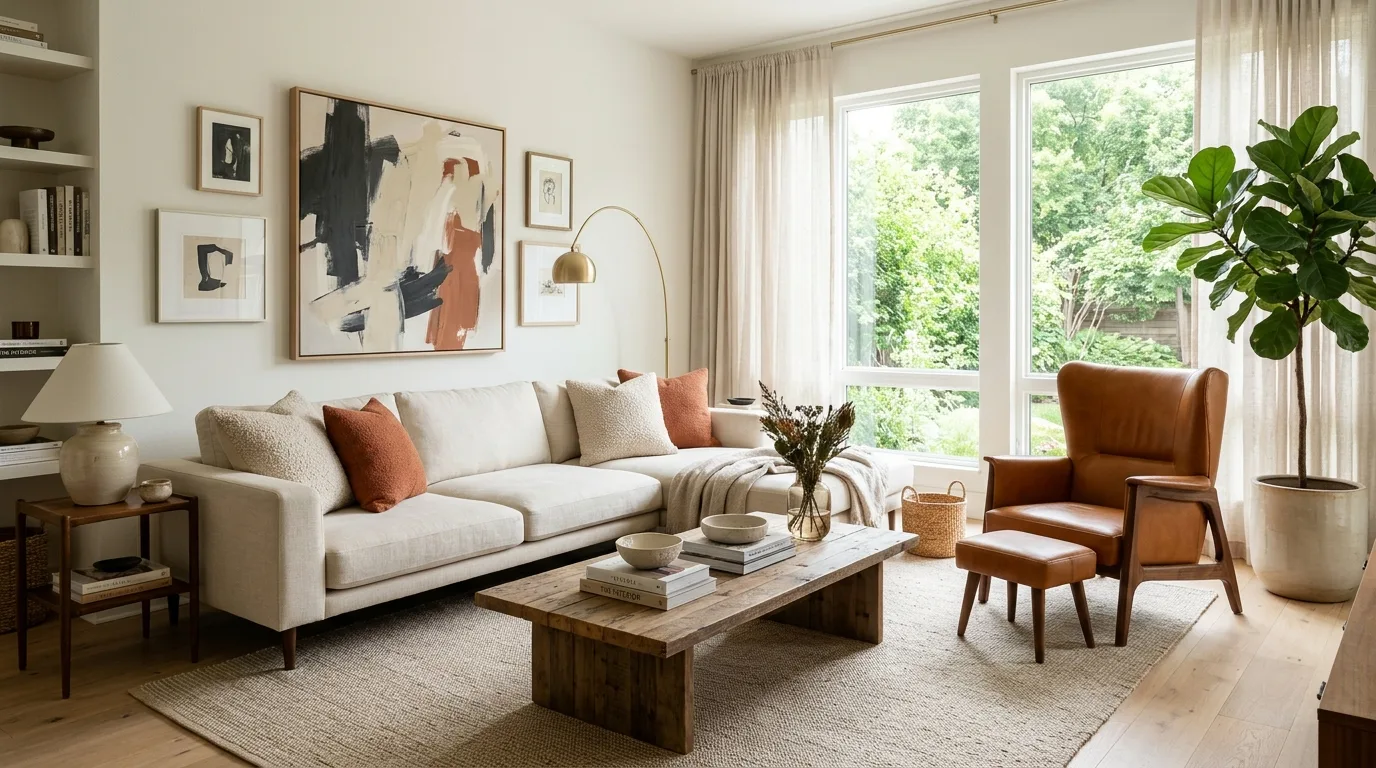
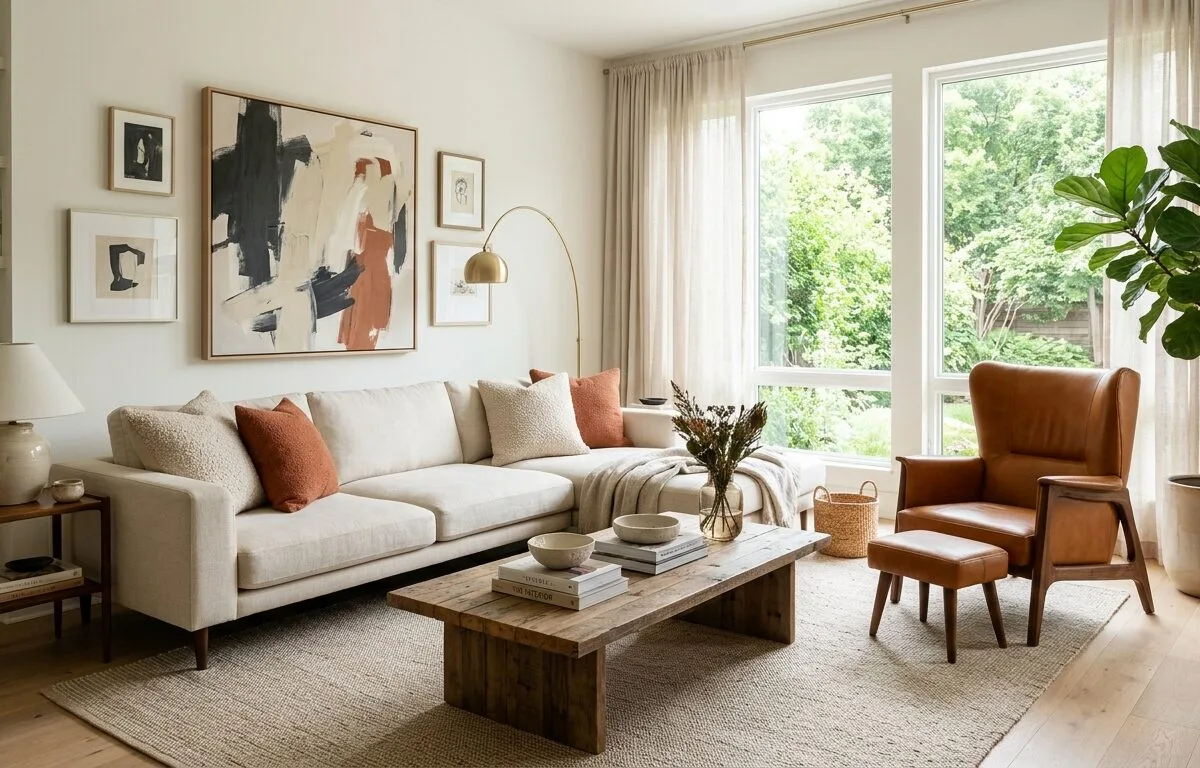
Buying a complete matching showroom set—matching sofa, matching loveseat, matching coffee table, and matching end tables—often leaves rooms feeling flat, uninspired, and dated. Curating a room across different design eras (mid-century, contemporary, rustic, and traditional) creates a layered, bespoke look that feels collected over time rather than purchased from a single catalog page.
However, when homeowners first explore how to mix furniture styles, the most common fear is creating visual chaos. Without a clear plan, blending disparate eras can easily make a living room look like an unintentional flea market spillover rather than a designer showcase. The secret lies in creating visual bridges between contrasting silhouettes.
6 Practical Rules for How to Mix Furniture Styles
Here are six field-tested styling techniques used by top interior designers on Dwell & Decor:
| Technique | How It Works | Real-World Example |
|---|---|---|
| 1. The 80/20 Balance Rule | 80% primary anchor style, 20% personality accent pieces. | A clean modern living room anchored by a tailored cream sofa, elevated by an antique French gilded mirror and a rustic wooden bench. |
| 2. The Unifying Color Thread | A consistent 3-4 shade palette ties contrasting silhouettes together. | Using ivory, warm olive, and rich cognac leather across both sleek modern chairs and traditional wooden tables. |
| 3. Common Denominator Shapes | Match underlying geometry across eras (curves with curves, clean angles with lines). | Pairing a curved contemporary bouclé sofa with a round 1970s travertine stone coffee table. |
| 4. Mixing Wood Tones with Undertones | Blend light and dark woods by matching their warm or cool undertones. | Pairing a rich walnut credenza with light white-oak floating shelves sharing warm honey undertones. |
| 5. Distribute Periods Evenly | Avoid bunching all vintage items on one side and all modern items on the other. | Placing modern sculptural lamps on top of an antique mahogany sideboard to balance old and new. |
| 6. The Power of Textural Contrast | Balance heavy vintage hardwoods with lightweight contemporary materials. | Pairing a chunky reclaimed wood dining table with airy black metal spindle chairs or molded acrylic seats. |
The 4 Most Celebrated Furniture Style Pairings That Always Work
If you are unsure where to begin when discovering how to mix furniture styles, these four proven design formulas produce instant harmony:
- Mid-Century Modern + Traditional Antiques: The sleek, tapered wooden legs of 1950s credenzas balance the ornate, heavy curves of traditional claw-foot chairs.
- Industrial Modern + Rustic Farmhouse: Matte black iron pipes and glass fixtures add modern edge to warm reclaimed barnwood dining tables and linen bench seats.
- Scandinavian Minimalism + Japanese Zen (Japandi): Light blonde birch woods, low-slung seating profiles, and organic paper lanterns create tranquil, clutter-free warmth. For deeper inspiration, see our guide on Japandi interior design rules for small homes.
- Art Deco Glamour + Contemporary Clean Lines: Bold geometric brass mirrors and rich emerald velvet ottomans pop against simple, tailored modern sofas.
Step-by-Step: How to Mix Furniture Styles in Your Living Room
Step 1: Anchor the Room with Neutral Foundation Pieces
Start with your largest furniture investments—the main sofa and large area rug. Choose a sofa with clean, tailored lines in a versatile neutral fabric (warm beige, oatmeal linen, or charcoal). Neutral foundation pieces act as a blank canvas, giving you full freedom to experiment with different eras. For grounding the entire space, check our guide on how to choose the right rug for a small living room to ensure correct sizing and proportions.
Step 2: Introduce Contrast Through Accent Chairs
Accent chairs are the easiest and lowest-risk vehicle when testing how to mix furniture styles. If your sofa is structured and contemporary, pair it with an authentic mid-century walnut lounge chair or a tufted vintage leather club chair. This stark contrast in era brings instant visual intrigue and prevents room monotony. You can see similar principles at play in our breakdown of modern vs. traditional home decor styles.
Step 3: Mix Your Wood Tones Confidently
One of the biggest anxieties homeowners face when discovering how to mix furniture styles is worrying about conflicting wood finishes. You do not need all wood furniture to match, but you should limit your space to two or three dominant wood finishes. The key is checking the underlying tone: warm cherry wood pairs naturally with warm walnut or warm white oak. According to historical decorative furniture collections at The Met, blending heritage woods with varied patinas has been a hallmark of sophisticated European estates for centuries.
Step 4: Use Patterns and Metal Hardware as the “Glue”
Hardware finishes and textiles act as the connective jewelry of your room. If your room features a mid-century coffee table, modern track lighting, and a traditional fireplace mantel, unify them using a single consistent metal finish—such as brushed antique brass or matte black. Additionally, learning how to mix patterns in home decor allows you to tie conflicting colorways together through throw pillows and drapery.
3 Common Mistakes to Avoid When Blending Eras
- Ignoring Scale and Seat Height: Placing a delicate, spindly mid-century accent table next to an overstuffed 90s rolled-arm sectional will make the table look toy-sized. Always match the scale and seat heights of seating pieces so guests sit comfortably at eye level.
- Falling into the “Flea Market Chaos” Trap: Understanding how to mix furniture styles does not mean hoarding random furniture without purpose. Every item in the room must earn its place through silhouette, color, or function.
- Skipping Negative Space: A multi-style room needs breathing room. Don’t crowd every square foot with decorative trinkets; leave wall gaps and open floor space so each distinct piece has room to shine.
Frequently Asked Questions About How to Mix Furniture Styles
Can you mix mid-century modern with traditional furniture?
Yes, in fact, this combination is one of the most celebrated in modern interior design. The sleek, low-slung, functional lines of mid-century furniture prevent traditional rooms from feeling stuffy, while traditional moldings and rich woods give mid-century pieces architectural grounding.
What is the 80/20 rule in interior decorating?
The 80/20 rule is an interior design guideline where 80% of a room’s decor follows one foundational style (establishing consistency), and 20% consists of distinct contrasting accents (adding personality, tension, and curated character).
How many different furniture styles can you mix in one room?
When learning how to mix furniture styles, stick to two (maximum three) distinct styles in a single room. For example: Scandinavian + Mid-Century Modern, or Contemporary + Traditional Antiques. Mixing four or more conflicting styles in a standard room often creates visual noise.
How do you make mismatched dining chairs look intentional?
Choose chairs that share a single common trait: either paint different chair silhouettes in the exact same color (like matte black), or use the exact same chair design in alternating warm wood finishes.
Summary & Action Plan for Dwell & Decor
Mastering how to mix furniture styles is all about embracing intentional contrast rather than accidental mismatching. Start by picking your anchor piece, selecting a 3-color palette thread, and bringing in one contrasting vintage or modern accent piece this weekend.

Evelyn Marlowe is a home decor writer and small-space devotee covering budget-friendly decorating, rental-friendly upgrades, and seasonal styling — always with real prices and practical advice. Her rule: beautiful homes should be livable, not just photographable.
Related Stories
Why Does Agreeable Gray Look Purple? (The Undertone Fix Decorators Use)
How to Choose the Right Rug for a Small Living Room