How to Choose the Right Rug for a Small Living Room
In this article
- 1. Size first: 5x8 or 6x9
- 2. Leave 8–10 inches of floor at the walls
- 3. Material: low pile wins in small rooms
- 4. Measure before you buy
- 5. Which rug to buy
- Rug size table for a small living room
- What it costs: budget bands
- Small living room rug mistakes to avoid
- Frequently asked questions
- What size rug for a small living room?
- Should the rug go under the sofa?
- How much floor should show around a rug?
- Is a big rug better in a small room?
- What rug material is best for a small living room?
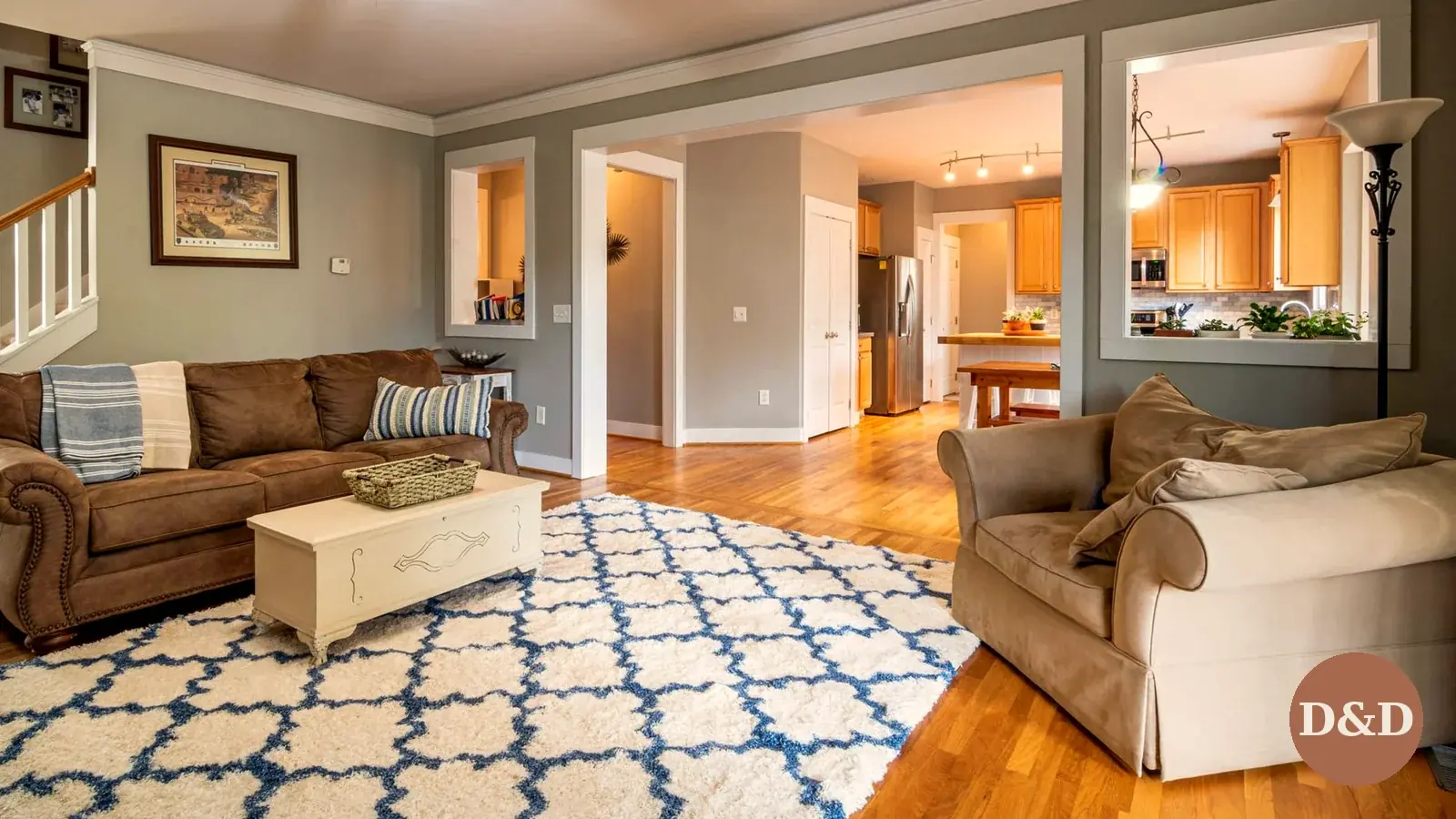
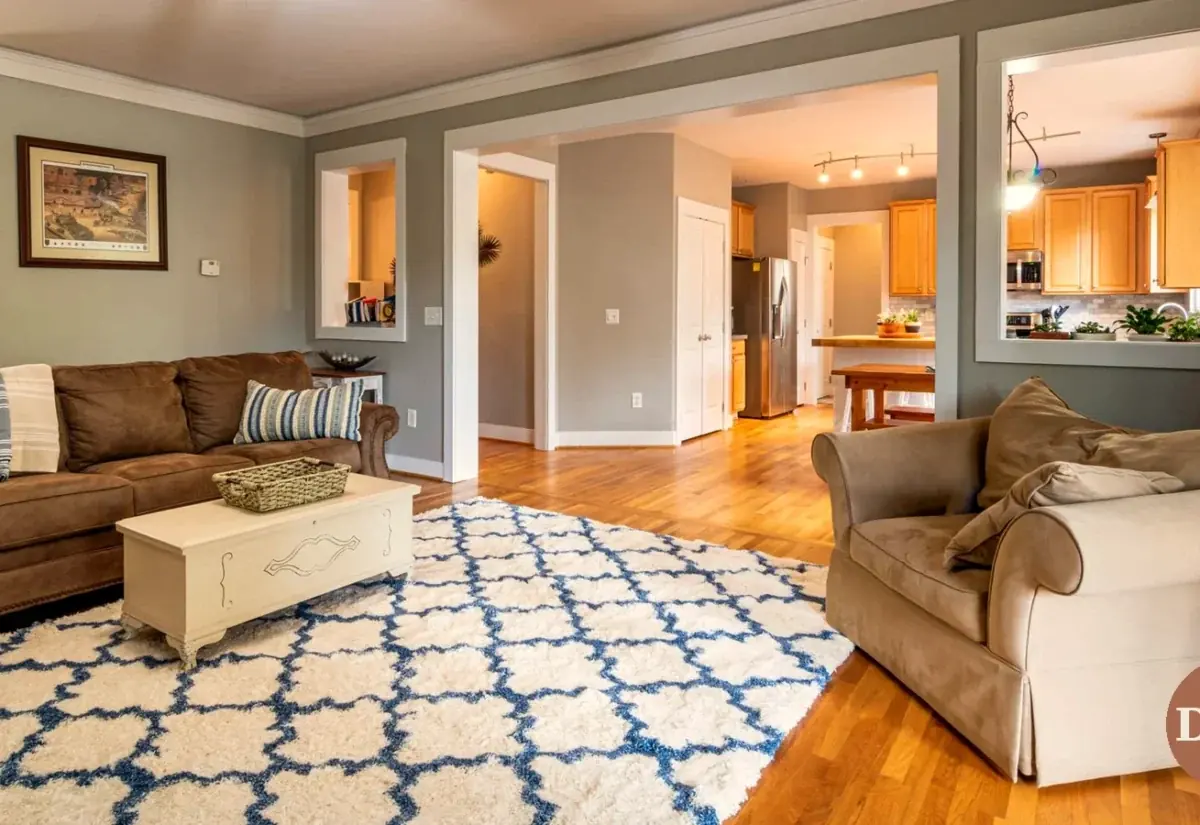
How to choose the right rug for a small living room starts with one rule: the rug should touch the furniture. A rug is a floor covering made with textile, typically an upper layer of pile attached to a backing — and because rugs are smaller and loose-laid rather than wall-to-wall, the size decision matters: a rug that floats in the middle of the room makes the whole room look smaller. This article gives you the size, the placement, and the material — in that order — plus our Rug Size Calculator to check your numbers before you pay.
1. Size first: 5×8 or 6×9
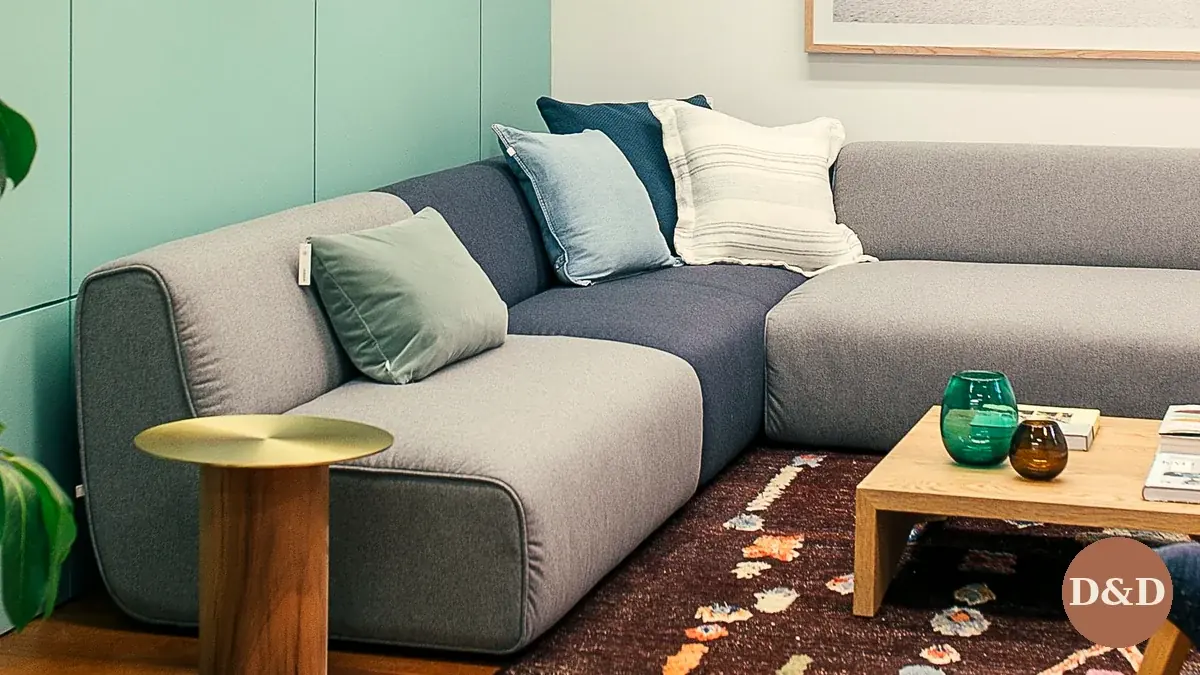
The idea: for most small living rooms, the right rug is 5×8 or 6×9. The gray sectional in the photo shows why: its front edge sits on the dark patterned rug, and the coffee table is on it too — the rug connects the furniture into one group. A rug that doesn’t reach the furniture is the single most common mistake: it floats in the middle and makes the room look smaller, not bigger.
How to do it: measure your seating group, not the room: the rug should be at least as wide as the sofa, and long enough for the front legs plus the coffee table. In a small room, 5×8 fits a loveseat and one chair; 6×9 fits a three-seat sofa and a coffee table. When in doubt, go one size up — a slightly big rug looks intentional, a slightly small one looks like a mistake.
2. Leave 8–10 inches of floor at the walls
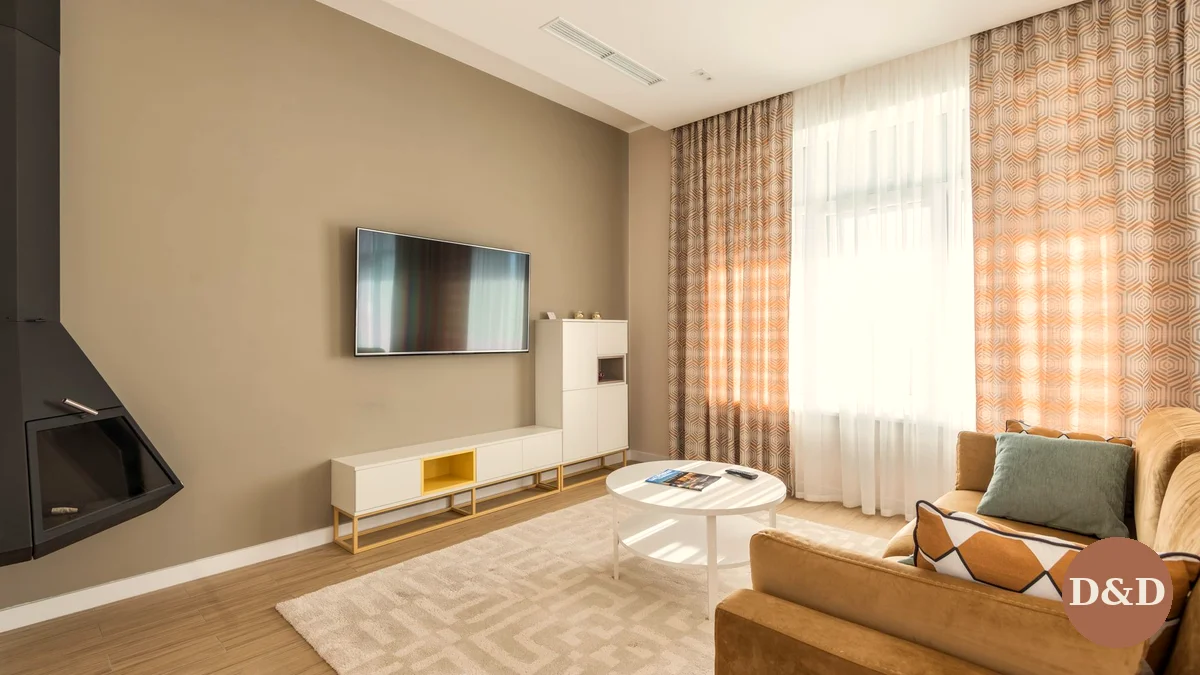
The idea: the rug should not touch the walls. The light patterned rug in the photo leaves a clear border of bare wood floor around it — that border is what makes the rug look placed, not stuffed in. Eight to ten inches of floor at the walls is the standard.
How to do it: measure from the wall to where the rug will end, on all four sides. If the rug would leave less than 8 inches of floor, go one size down. If it would leave more than 18 inches, go one size up. The fireplace at the left edge of the photo is unlit — but notice how the rug stops well short of it: the border does the work.
3. Material: low pile wins in small rooms
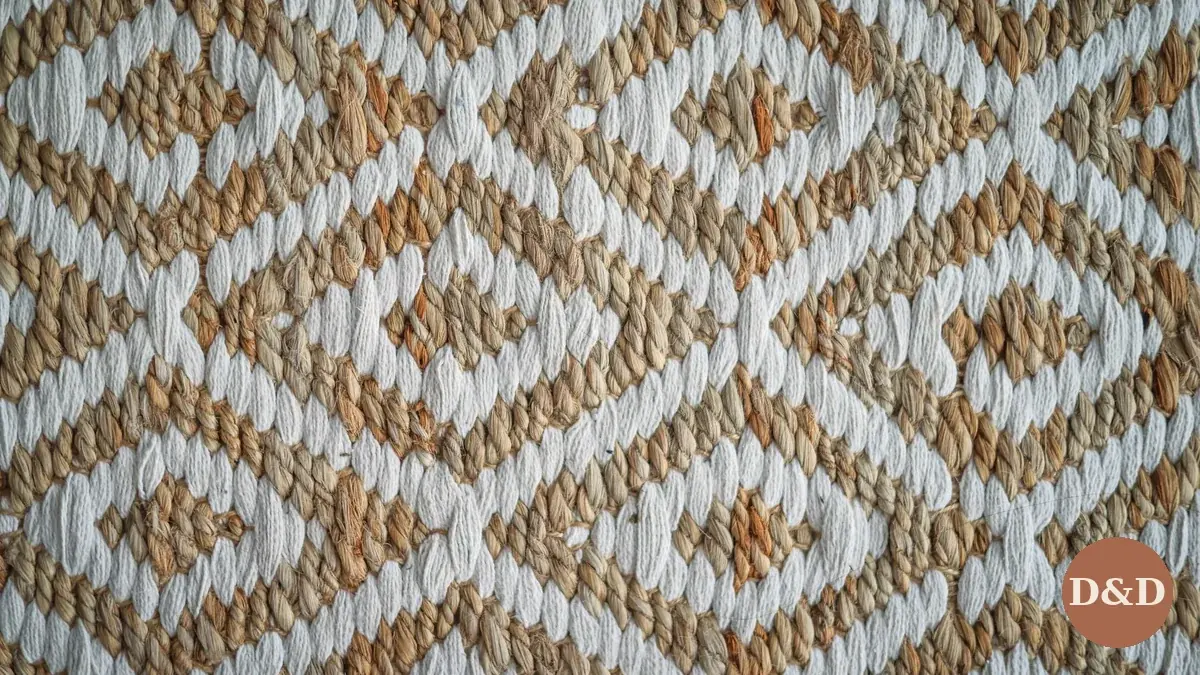
The idea: in a small room, a high-pile rug eats the space visually — it looks like a second floor. The flatweave in the photo — natural jute and white cotton in a diamond pattern — sits low, shows the weave, and lets the room breathe. Low pile also cleans easier and doesn’t trap the legs of chairs.
How to do it: pick flatweave, low-pile wool, or cotton for a small living room. Save high-pile and shag for the bedroom, where nobody drags chairs across it. If you have pets or kids, washable low-pile is the practical pick — and a rug pad underneath keeps it from sliding on hard floors.
4. Measure before you buy

The idea: the tape measure in the photo reads 34 to 40 inches — and that’s the whole step. Measure the seating group, the wall clearances, and the door swing before you order. A rug that blocks a door is a rug you’ll trip over.
How to do it: three measurements: the sofa’s width, the distance from the sofa’s front legs to the far side of the coffee table, and the wall clearances on all sides. Write them down — or better, run them through our Rug Size Calculator and check the size before you pay. Painter’s tape on the floor, in the rug’s outline, is the free version: live with the outline for a day.
5. Which rug to buy
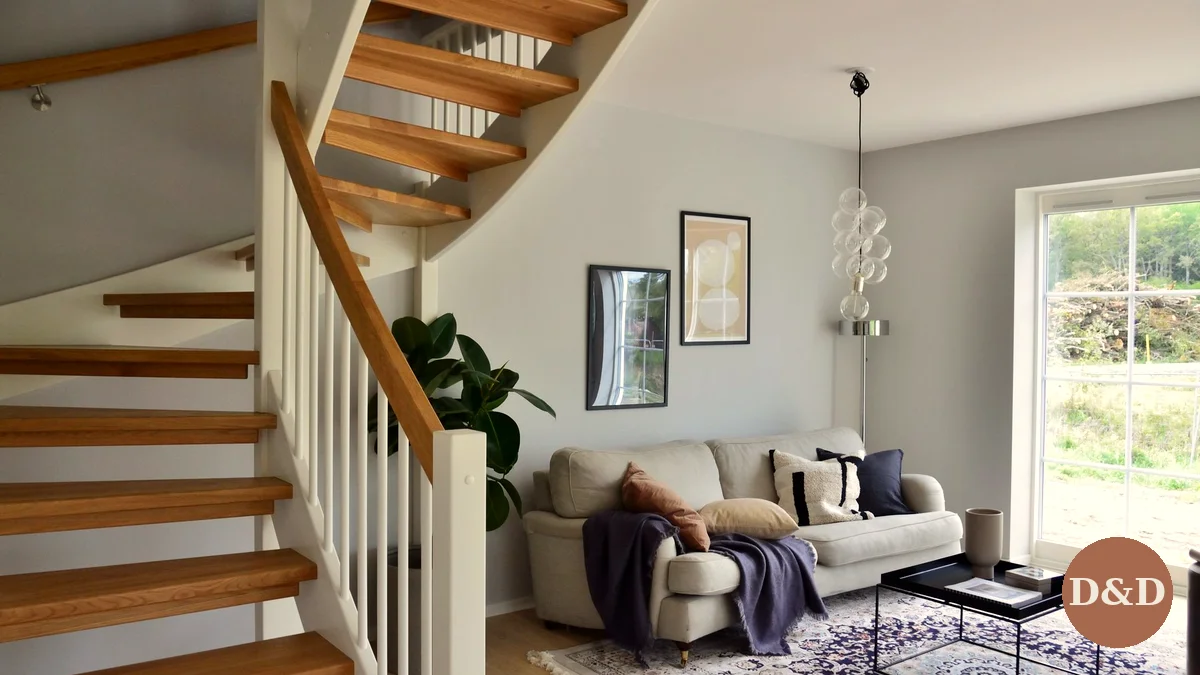
The idea: buy the rug that anchors the group. The white sofa and black coffee table in the photo sit on a patterned rug — the rug is what makes them one seating area instead of two pieces of furniture. (The wooden staircase at the side is just the room’s shape — the rug does the anchoring, not the walls.)
How to do it: before you pay, check in this order: 1) size — 5×8 or 6×9 for a small room; 2) placement — front legs on, 8–10 inches of floor at the walls; 3) pile — low, washable if you have pets or kids; 4) returns — you can’t feel a rug through a screen, so buy from somewhere that takes it back.
Rug size table for a small living room
| Seating | Rug size | Notes |
|---|---|---|
| Loveseat + one chair | 5×8 | Front legs on, coffee table on |
| Three-seat sofa + coffee table | 6×9 | The standard small living room pick |
| Sectional | 8×10 or 9×12 | Only if the room fits it with 8–10 inches of floor at the walls |
| Studio / open plan | 6×9 | The rug defines the seating zone |
What it costs: budget bands
Plan by band, not by item — and remember the size matters more than the price:
| Band | What your money buys |
|---|---|
| Under $100 | A 5×8 flatweave or low-pile rug in cotton or synthetic — the test size |
| $100–$300 | A 6×9 low-pile wool or washable rug with a rug pad |
| $300+ | A 6×9 or 8×10 wool rug with a proper pad, from a brand with easy returns |
Start at the bottom band if you have never bought a rug for the room. One 5×8 tells you whether the size and the pile work — and whether the dog sheds on it — before you buy the whole-room version.
Small living room rug mistakes to avoid
Buying the too-small rug. A rug that doesn’t reach the furniture floats and shrinks the room. When in doubt, go one size up.
Pushing the rug against the walls. Leave 8–10 inches of floor — the border is the point.
High pile in a small room. It eats the space visually and traps chair legs. Save shag for the bedroom.
Skipping the rug pad. A rug on hard floors slides — and bunches under the coffee table.
Ordering without measuring the door swing. A rug that blocks a door is a rug you’ll trip over.
Frequently asked questions
What size rug for a small living room?
5×8 or 6×9 for most small living rooms. 5×8 fits a loveseat and one chair; 6×9 fits a three-seat sofa and a coffee table. When in doubt, go one size up.
Should the rug go under the sofa?
The front legs should be on the rug — always. All four legs on is the most formal look; front legs on is the standard for small rooms. No legs on means the rug is too small.
How much floor should show around a rug?
Eight to ten inches of bare floor at the walls. Less than that and the rug looks stuffed in; much more and it looks like a mat.
Is a big rug better in a small room?
Usually, yes — a slightly big rug makes the room look bigger, because the furniture reads as one group. A too-small rug does the opposite.
What rug material is best for a small living room?
Low pile: flatweave, low-pile wool, or cotton. It sits low, cleans easier, and doesn’t trap chair legs. Washable low-pile is the practical pick with pets or kids.
Check your numbers with our Rug Size Calculator before you order. If you’re renting, our how to decorate a rental keeps the deposit safe. And if the whole room needs a system, our small space organization hacks cover the rest.
Related: Trying to anchor a warm oak living room or balance bold rug prints with cushions? Read our farmhouse decor ideas and how to mix patterns in home decor.

Evelyn Marlowe is a home decor writer and small-space devotee covering budget-friendly decorating, rental-friendly upgrades, and seasonal styling — always with real prices and practical advice. Her rule: beautiful homes should be livable, not just photographable.
Related Stories

Brushed Cotton vs. Flannel Bedding: What Is Different?

Amazon Home Decor Finds Under $50 That Look High-End