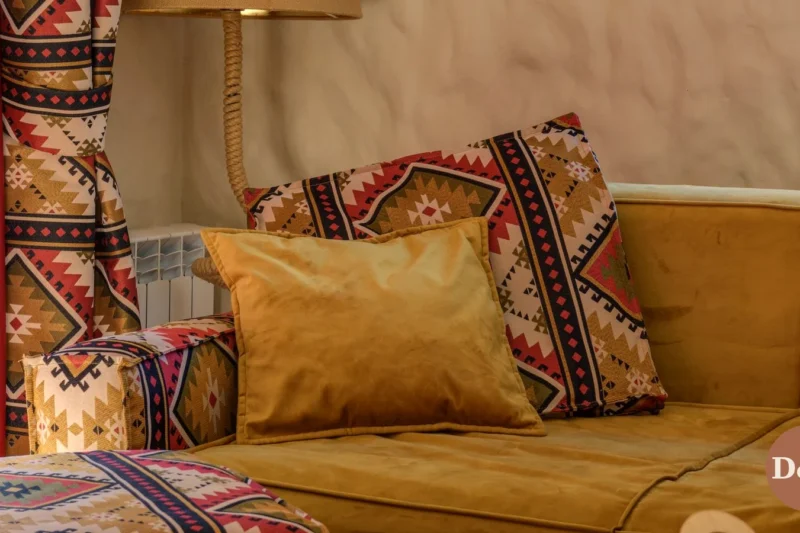
Modern vs. Traditional Home Decor: Key Differences

In this article
- Modern, up close
- Traditional, up close
- The third way: transitional
- Which one costs less to start?
- 5 questions to decide
- Room-by-Room Blending Matrix (Getting Transitional Right)
- Renter-Safe Accents That Shift a Room’s Style Fast
- Modern vs. Traditional Home Decor FAQs
- Which style costs less to furnish on a budget?
- Can you mix modern and traditional decor in a small living room?
- Which looks better in a rental apartment?
- What lighting temperature fits each style?

Modern vs traditional home decor is really a question about two philosophies: one says a room should show its history, the other says a room should show its purpose. Traditional design comes from 18th- and 19th-century European rooms — symmetry, carved wood, rich color. Modern design comes from the early- to mid-20th-century Bauhaus movement, built on one rule: form follows function. The table below is the whole comparison — then each style up close, and the third way that mixes them.
One warning first: modern is not the same as contemporary. Modern is a 1920s–1950s movement; contemporary is whatever is popular right now. A brand-new room can be contemporary without being modern at all.
| Element | Traditional | Modern |
|---|---|---|
| Lines & shapes | Curves, rolled arms, cabriole legs | Straight lines, square arms, right angles |
| Color palette | Deep reds, forest green, navy, warm gold | Whites, blacks, grays, beige + one bold accent |
| Materials | Dark wood (mahogany, cherry, walnut), velvet, silk, brocade | Steel, chrome, glass, leather, linen, cotton |
| Furniture | Ornate, carved, tufted, symmetrical | Low, sleek, geometric, functional |
| Patterns & textiles | Floral, damask, layered drapery | Solids, minimal pattern, bare windows or roller shades |
| Lighting | Chandeliers, warm golden light, table lamps | Recessed lights, pendants, natural light |
| Layout | Formal, symmetrical, room-specific | Open-plan, flexible, asymmetrical balance |
| Cost to start | Higher — carved wood + layered textiles add up | Often lower — fewer, larger pieces |
Modern, up close
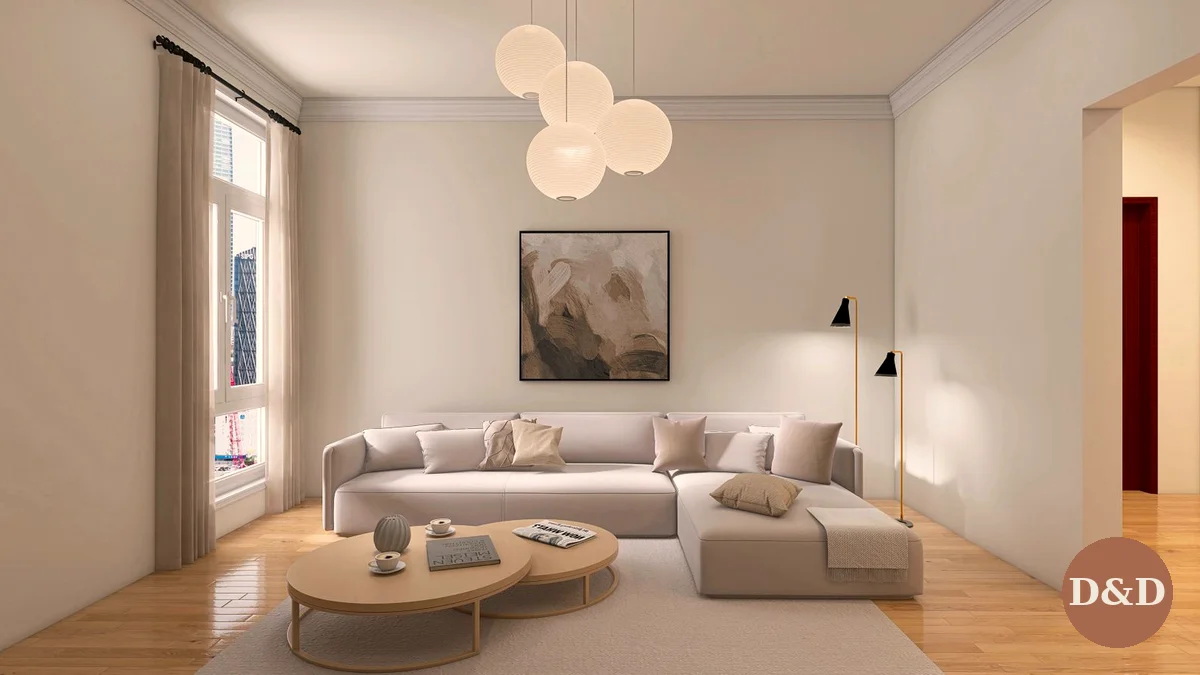
The room in the photo is modern in one glance: a low white sectional, paper-lantern pendants, one large abstract painting — and nothing that does not earn its place. Form follows function means every piece serves a purpose; ornament is stripped away, and materials are honest: steel, glass, leather, linen in solid colors. Windows stay bare or take a simple roller shade, so the light does the decorating.
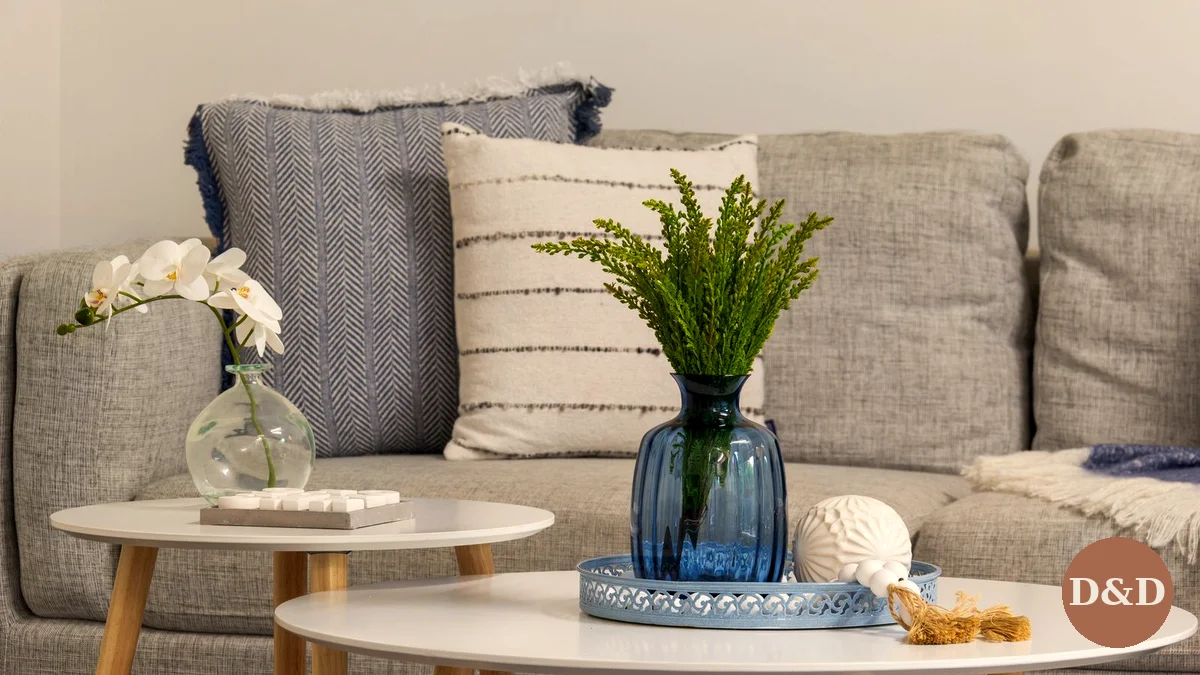
The details tell the same story. Two white nesting tables, a blue glass vase of greenery, a white orchid — three objects, not thirty. Scale is the secret: one large sofa, one large rug, one large artwork create the calm, while many small objects would undo it.
Traditional, up close
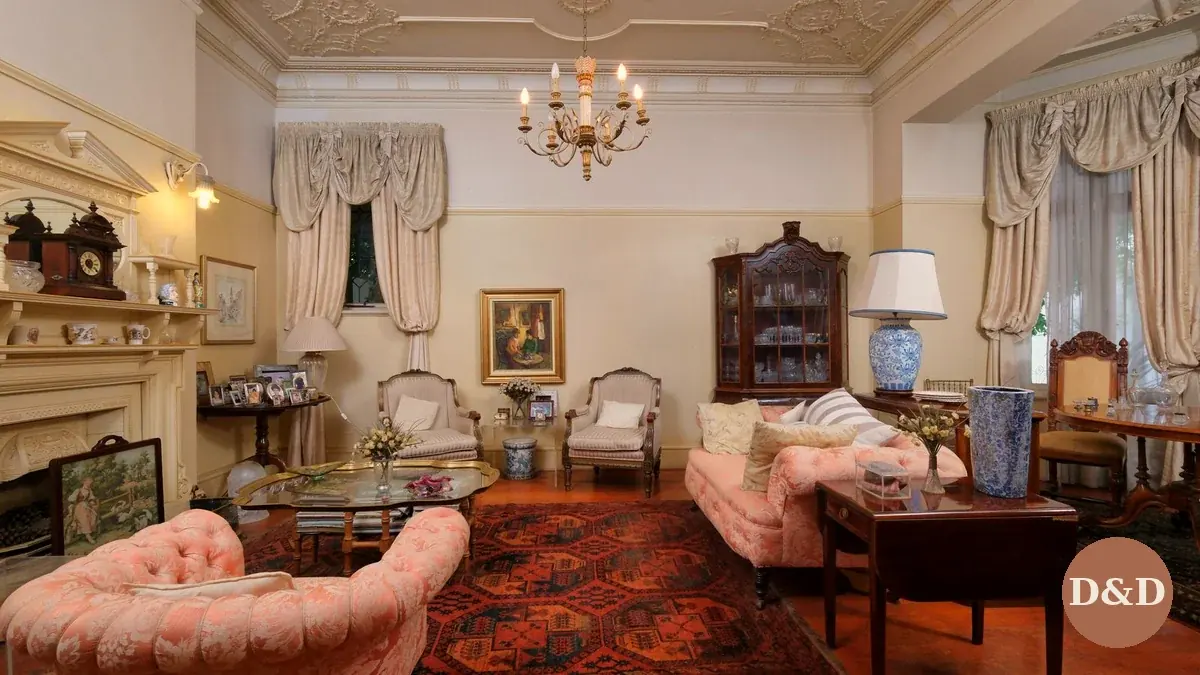
The traditional room is the opposite bet: an ornate plaster ceiling, a chandelier, swagged curtains, pink tufted sofas, a Persian-style rug, and a dark-wood china cabinet with blue-and-white porcelain. Symmetry does the organizing — matching lamps flank the sofa, paired chairs face each other, and a fireplace or window sets the central axis. Color is layered: deep reds, greens and golds against cream trim so the room feels rich, not heavy.
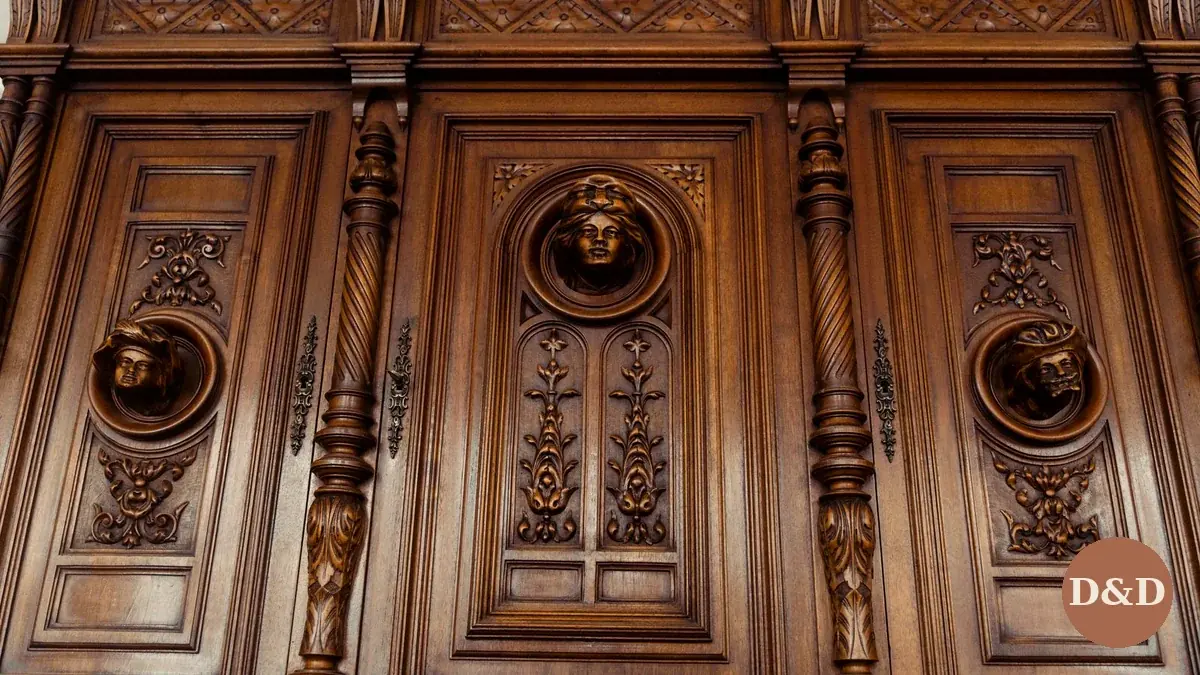
Look closer and the ornament is the point. The cabinet in the photo is covered in carvings — twisted columns, floral panels, carved faces set in roundels. Traditional furniture is made to be looked at: mahogany, cherry and walnut, velvet, silk and brocade, nothing plain for the sake of plain.
The third way: transitional
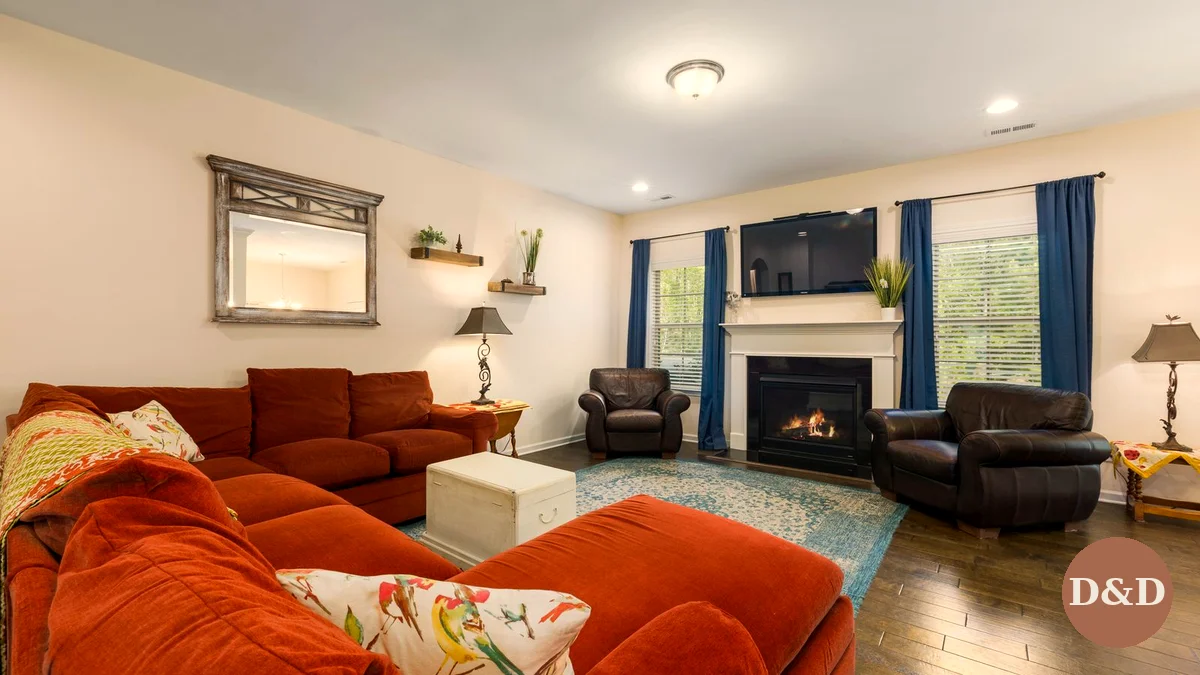
Most real rooms end up here. Transitional keeps traditional proportions and comfort and drops the ornament: plainer moldings, cleaner profiles, warm neutrals with traditional colors as accents. The photo shows it — a rust sectional and dark leather armchairs, a TV above the fireplace, blue curtains. Old comfort, new lines. The rule for mixing: pick one side to lead (usually traditional comfort) and let the other one accent. A room with flat-front cabinets and minimal trim follows modern logic even if it holds an antique rug.
Which one costs less to start?
Modern usually costs less to start: fewer pieces, each larger and simpler, and flat-pack or modular furniture fits the look. Traditional costs more: carved solid wood, layered textiles and antiques add up fast. Transitional is the cheapest way to change a room you already have — keep the sofa, change the cushions, the lighting and one rug. Whichever you pick, start with the biggest surface (sofa, rug or curtains) and let it set the budget; the small pieces follow.
5 questions to decide
1. Symmetry or asymmetry? If matching pairs calm you, go traditional. If off-center feels alive, go modern.
2. Calm or cozy? Modern reads calm and airy; traditional reads cozy and layered.
3. Kids or pets? Modern’s wipeable surfaces and fewer objects survive better; velvet and silk do not.
4. Do you own heirlooms? A carved cabinet or an antique rug needs a traditional — or transitional — room to belong.
5. How often do you redecorate? Modern’s neutral base is cheaper to restyle with one accent; traditional’s rich palette commits you longer.

Room-by-Room Blending Matrix (Getting Transitional Right)
Most US homes already have builder-grade drywall, standard baseboards, and existing upholstery you cannot replace overnight. The table below shows exactly how to blend clean modern structure with traditional warmth room by room without clashing styles:
| Room | Keep Modern (Clean Base) | Layer Traditional (Warm Character) | Visual Balance Tip |
|---|---|---|---|
| Living room | Track-arm linen sofa, low oak coffee table, crisp white walls | Faded Persian-style patterned rug, pleated lampshades, antique brass mirror | Keep sofa lines geometric so patterned rugs never feel dated |
| Bedroom | Simple upholstered platform bed, flush-mount drum lighting | Turned-wood vintage dresser, plaid or block-print lumbar pillow | Use warm 2700K bulbs across both styles to unify wood tones |
| Dining nook | Clean pedestal round table, minimal pendant fixture | Windsor or bentwood wooden dining chairs, linen table runner | Match wood undertones (warm oak or walnut) rather than exact finishes |
Renter-Safe Accents That Shift a Room’s Style Fast
If your rental apartment came with flat white doors and zero trim molding, fighting the architecture with ornate gilded decor can feel forced. Lean into 70% modern clean lines across big silhouettes — neutral curtains hung high and wide, framed abstract prints in thin black or oak frames, and simple matte hardware — then introduce 30% traditional soul through textured woven throws, heirloom ceramic vases, warm brass sconces, and richly patterned cushion covers you can swap in ten minutes.
Modern vs. Traditional Home Decor FAQs
Which style costs less to furnish on a budget?
Modern rooms usually cost less to start because you buy fewer, cleaner silhouettes — a simple track-arm sofa, a plain wood dining table, and two or three large-scale pieces. Traditional rooms look unfinished without trim, patterned rugs, carved wood accents, and layered lighting, though thrifting vintage dressers and brass lamps closes that cost gap fast.
Can you mix modern and traditional decor in a small living room?
Yes — blending them is called transitional style, and it keeps compact rooms from feeling either sterile or overly formal. A reliable 70/30 rule works best: keep large upholstery modern and clean-lined, then layer warmth through one vintage wood coffee table, framed art, or traditional brass hardware.
Which looks better in a rental apartment?
Modern and transitional rooms adapt best to rentals with basic builder drywall and flat trim. If a rental lacks crown molding, carved wainscoting, or warm hardwood floors, trying to force heavy traditional furniture inside can highlight the plain architecture; clean-lined furniture with warm woven rugs and lamps bridges both effortlessly.
What lighting temperature fits each style?
Traditional rooms depend on warm 2700K incandescent-style bulbs through fabric lamp shades and warm metal sconces. Modern interiors lean slightly brighter around 2700K–3000K in architectural pendants and recessed cans, though in small living rooms and bedrooms, sticking close to 2700K prevents stark, cold shadows.
If you lean modern, see our quiet luxury bedroom — the calm, neutral end of the modern spectrum. If you lean traditional, dark academia bedroom is its moody cousin. And for the rug under either style, see how to choose the right rug for a small living room.

Evelyn Marlowe is a home decor writer and small-space devotee covering budget-friendly decorating, rental-friendly upgrades, and seasonal styling — always with real prices and practical advice. Her rule: beautiful homes should be livable, not just photographable.
Related Stories

What Is Traditional Interior Design? Timeless Decor Rules, Elements & Ideas
Why Does Agreeable Gray Look Purple? (The Undertone Fix Decorators Use)