Farmhouse Decor Ideas: 7 Warm Touches That Work

In this article
- Is Farmhouse Style Out for 2026?
- 7 Farmhouse Decor Ideas That Still Work
- Farmhouse Kitchen: White, Wood, and Open Shelves
- Let One Wood Piece Carry the Room
- Cozy, Not Cluttered: Linen and Layers
- Vintage Finds Beat Matching Sets
- The Dining Table Is the Heart
- Farmhouse Bedroom: Quilt, Wood, Quiet
- What to Skip in 2026
- Farmhouse on a Budget: A Simple Spend Plan
- Frequently Asked Questions
- How do I decorate my house farmhouse style?
- Is farmhouse style out for 2026?
- What trend is replacing modern farmhouses?
- What is the 3-5-7 rule in decorating?
Quick answer: Farmhouse decor ideas for 2026 are about warmth, not theme: warm wood, white and cream walls, natural textures, and a few vintage pieces — edited, not piled on. Farmhouse is not out; it evolved from literal country (barn doors everywhere, word signs) into a streamlined modern farmhouse. The 7 ideas below show the current version, plus what to skip.
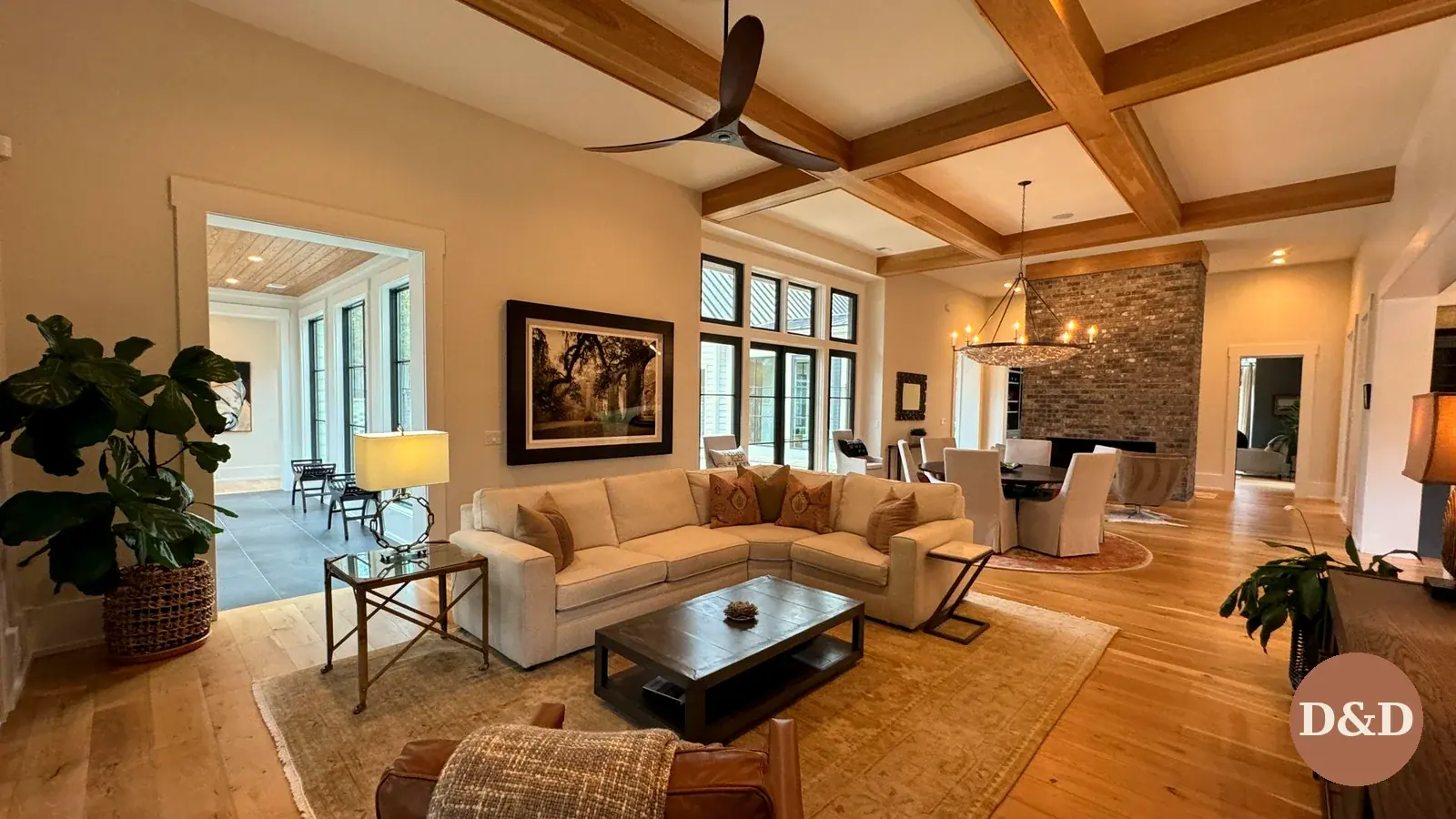
A warm modern farmhouse living room — wood, cream, and texture.
Is Farmhouse Style Out for 2026?
No — it changed. The classic American farmhouse was a working building: a simple rectangular plan, local materials, and a big central fireplace for cooking and heating. The modern farmhouse look that spread in the late 2010s kept the warmth of that original and dropped the literal parts.
The idea: today’s farmhouse is old and new mixed — warm white walls, one or two honest wood pieces, black metal accents used sparingly, and plenty of texture. What left the style behind is the theme-park version: a barn door on every doorway, a word sign on every wall, and galvanized metal everything. If your room looks like a farm gift shop, it is the old version. If it looks like a warm, lived-in home with wood and linen, it is the current one.
7 Farmhouse Decor Ideas That Still Work
- Warm wood, not gray wood. Natural oak, walnut, and reclaimed wood tones — gray-washed everything reads cold now.
- Warm white walls. Cream and soft white, not stark white and not all-gray.
- Linen and texture over pattern. Plain linen, cotton, wool, and jute carry the coziness.
- One vintage find per room. An old mirror, a wooden crate, a secondhand bench — not a collection of themed props.
- Black accents, used sparingly. A black faucet, black frames, or black hardware — one metal note, not five.
- Open kitchen shelving with everyday dishes. Useful and pretty at the same time.
- A dining table built for gathering. A solid wood table with simple chairs beats a formal set nobody sits at.
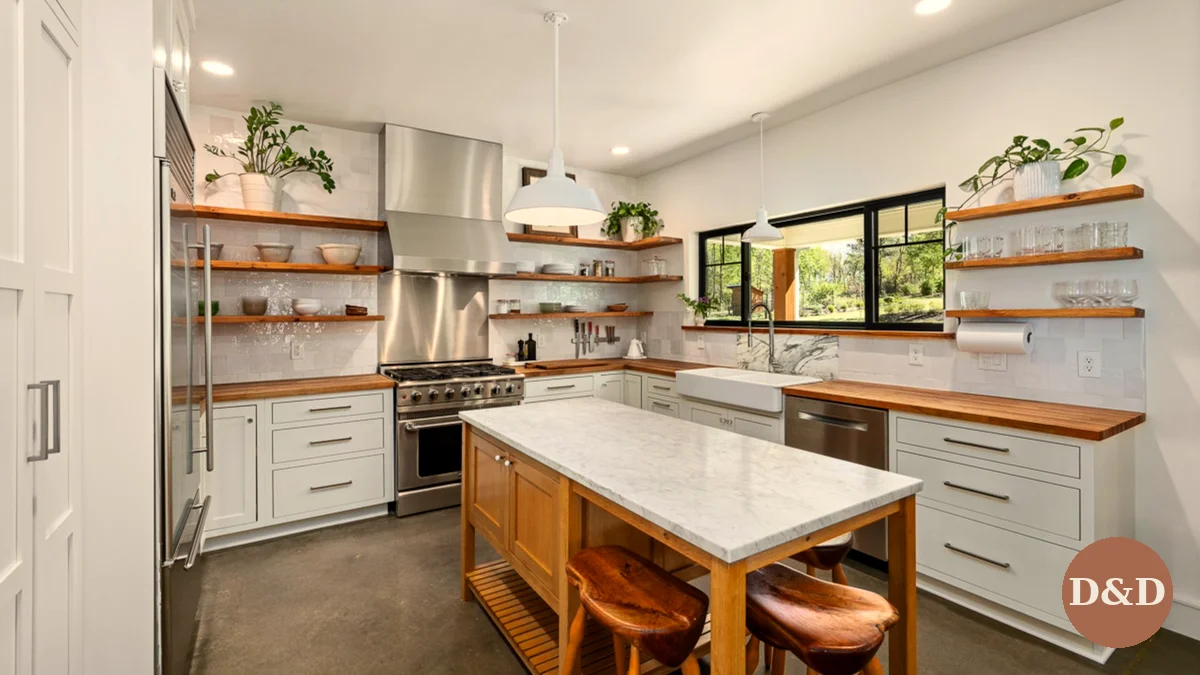
A farmhouse kitchen: white, wood, and shelves with everyday dishes.
Farmhouse Kitchen: White, Wood, and Open Shelves
The idea: the farmhouse kitchen works because it is honest — things you use, where you can reach them, in materials that age well.
How to do it: keep upper cabinets white or cream, add one wood element (open shelves, a butcher-block section, or a wood hood cover), and style the shelves with dishes you actually eat from. Skip the matching canister set with words on it. If your pantry needs the same treatment, see small pantry organization ideas on a budget — the same “useful first” thinking applies.

One strong wood piece does more than a room full of rustic props.
Let One Wood Piece Carry the Room
The idea: farmhouse warmth comes from wood, but one strong piece beats ten small rustic objects. A reclaimed coffee table, a wood beam, or a solid dining table gives the room its character; everything else can stay simple.
How to do it: pick the biggest wood surface in the room and make it the best one you can afford — secondhand is fine, and often better, because real wear looks right. Then keep the other furniture plain: a linen sofa, a simple rug, one black accent. If storage is tight, the same rule works under the stairs — see under stairs storage ideas on a budget for wood-friendly storage that stays out of sight.

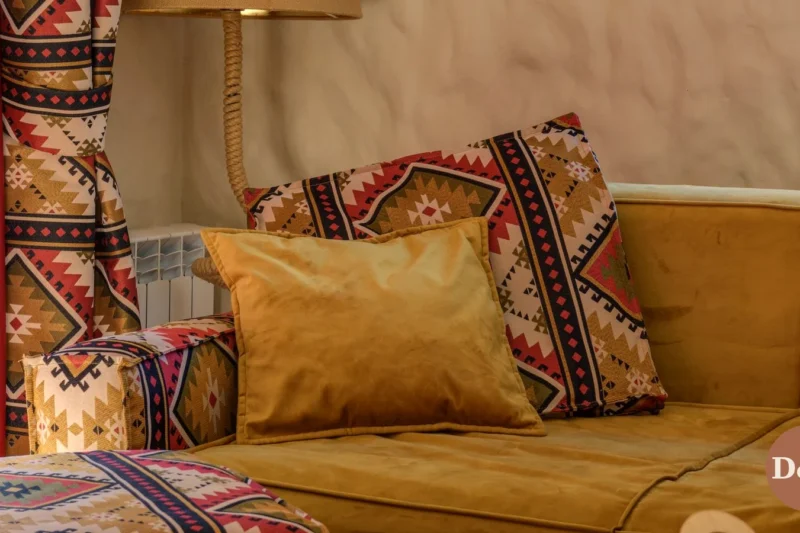
A sofa corner with pillows and a throw — cozy without clutter.
Cozy, Not Cluttered: Linen and Layers
The idea: farmhouse coziness is texture, not stuff. Linen sofa covers, a wool throw, a jute rug, and cotton pillows make a room feel lived-in without filling every surface.
How to do it: layer three textures and stop: something soft (throw), something woven (rug or basket), something plain (linen cushions in cream or sage). Keep coffee-table styling to three things — a candle (LED, for safety), a book, and one small plant. For the warmer, moodier side of cozy, see dark cozy living room ideas — the layering method is the same.

One vintage find per room keeps farmhouse personal, not themed.
Vintage Finds Beat Matching Sets
The idea: a farmhouse room should look collected over time, not bought in one afternoon. One real vintage piece — an old mirror, a wooden bench, a crate — gives the room a story that a matching set cannot.
How to do it: shop secondhand first for one piece per room, and check it is solid and useful, not just decorative. Hang the old mirror, sit on the old bench, store blankets in the old crate. If a piece only looks farmhouse but does nothing, leave it in the shop.
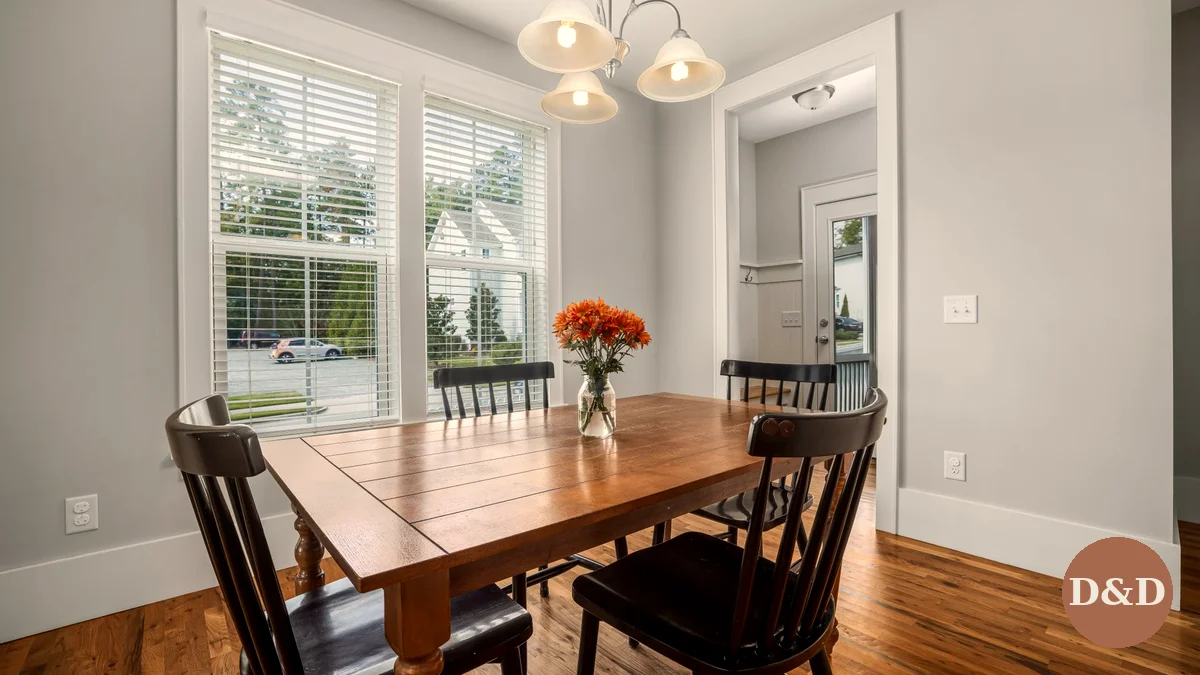
A solid wood dining table is the heart of a farmhouse home.
The Dining Table Is the Heart
The idea: the original farmhouse centered on a big table and a fireplace because that is where the household gathered. The modern version keeps the table and drops the formality.
How to do it: choose a solid wood table you can actually eat at every day, with simple chairs that mix fine — two wood chairs and a bench is more farmhouse than a six-chair matching set. Keep the centerpiece low and simple: a linen runner, a wooden bowl, or a few stems in a jar, so people can see each other across it.
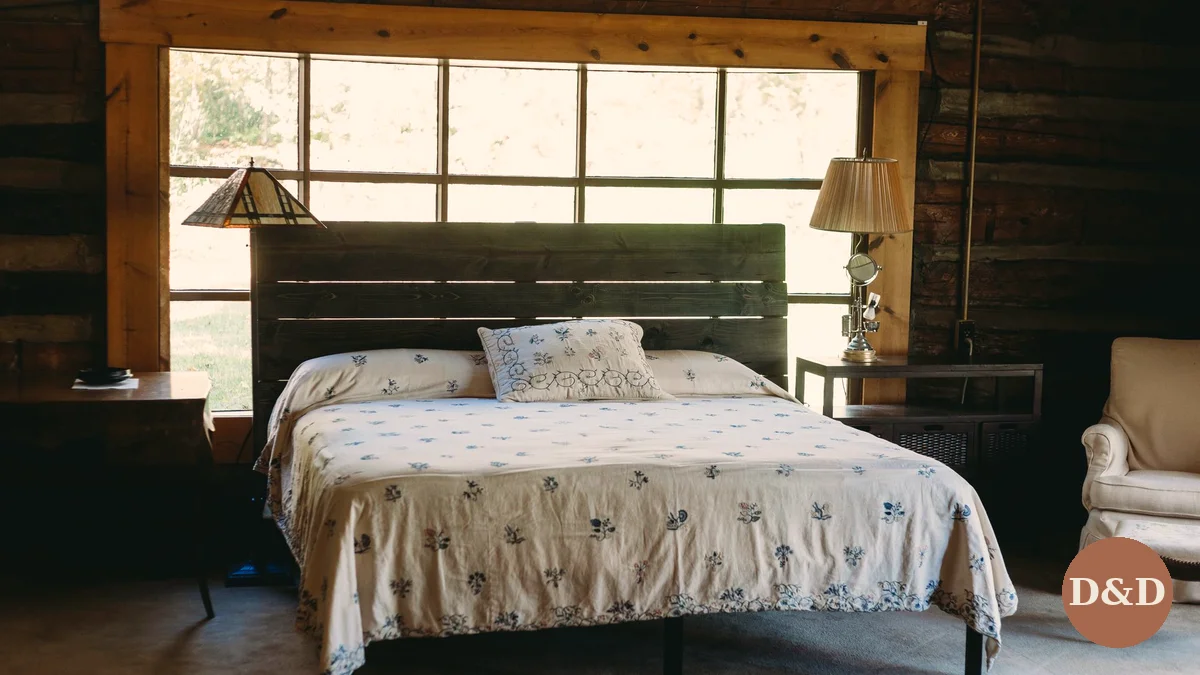
A farmhouse bedroom: floral bedding, wood headboard, quiet light.
Farmhouse Bedroom: Quilt, Wood, Quiet
The idea: the bedroom version is the same recipe, quieter: a wood headboard, a quilt or coverlet, and colors that let you sleep.
How to do it: layer a quilt over plain bedding, add one wood nightstand (secondhand is ideal), and keep the walls cream or soft sage. Skip the themed bedding set and the word art above the bed — one framed print or a small wreath of dried stems is enough.
What to Skip in 2026
- Word art signs. The fastest way to date a farmhouse room. Let the materials speak instead.
- Galvanized metal everywhere. One metal accent is fine; a room of buckets, stars, and trays is the old version.
- Fake distressed everything. Factory-distressed furniture next to real vintage looks wrong. Buy real secondhand or buy plain.
- A barn door on every doorway. One sliding door as a feature is fine. Every doorway is a theme.
- All-gray palettes. Gray walls, gray sofa, gray rug reads cold now — warm white and wood read current.
Farmhouse on a Budget: A Simple Spend Plan
Farmhouse is one of the cheapest styles to do well, because secondhand wood and linen are the look — not new themed decor. These are planning bands, not store prices: shop secondhand first.
| Plan | What it covers | Best for |
|---|---|---|
| Refresh ($0–$100) | Declutter, rearrange, linen pillow covers, thrifted wood crate or mirror | A room that already has warm walls |
| Room update ($100–$300) | Secondhand wood coffee table or bench, jute rug, linen curtains | Living room or bedroom |
| Full shift ($300+) | Solid wood dining table, wood shelving wall, quality quilt set | A room you are redoing anyway |
Frequently Asked Questions
How do I decorate my house farmhouse style?
Start with warm white walls, add one strong wood piece per room, layer linen and natural textures, and finish with one vintage find per room. Keep black accents to one metal note, and skip word signs and themed props — the current farmhouse look is warm and edited, not a farm gift shop.
Is farmhouse style out for 2026?
No, but the old literal version is. Barn doors on every doorway, word art, and galvanized everything read dated now. The current version — warm wood, cream walls, linen, and a few vintage pieces — is still going strong, and interest has been rising again through the autumn.
What trend is replacing modern farmhouses?
No single trend replaced it — farmhouse itself evolved. The direction is warmer and more streamlined: natural materials, warm whites, less theme, more texture. Think of it as farmhouse growing up into a warm, modern organic look rather than being replaced by something else.
What is the 3-5-7 rule in decorating?
The 3-5-7 rule — also called the rule of odd numbers — says to group decor objects in threes, fives, or sevens instead of even pairs. Odd groups feel more natural and less rigid to the eye, and the rule works best on shelves, mantels, and coffee tables. It is a guideline, not a law: if a single object or a pair looks right, that wins.

Evelyn Marlowe is a home decor writer and small-space devotee covering budget-friendly decorating, rental-friendly upgrades, and seasonal styling — always with real prices and practical advice. Her rule: beautiful homes should be livable, not just photographable.
Related Stories

What Is Traditional Interior Design? Timeless Decor Rules, Elements & Ideas
Why Does Agreeable Gray Look Purple? (The Undertone Fix Decorators Use)