Christmas Light Ideas: No-Nails Renter Plan
In this article
- The Lighting Plan (Before You Buy Anything)
- 1. Roofline and Icicle Lights
- 2. Indoor Tree Lights (Inside Out)
- 3. Window Fairy and Curtain Lights
- 4. Porch Railing and Pathway Lights
- 5. Mason Jar Fairy Lights (No Outlet Needed)
- 6. Mantel Garland Lights
- Hanging Lights Without Nails (Renter-Friendly)
- Safety, Timers, and the LED Difference
- The $40–$75 Shopping List
- Christmas Light FAQs
Quick answer: The best christmas light ideas follow one plan: pick 3–5 focal points (roofline, tree, windows, porch, mantel), use one light theme across all of them, hang everything with clips and hooks — no nails — and put it all on timers. One warm-white theme, $40–$75 total, and the whole house glows together instead of looking scattered.
Christmas lights are the cheapest transformation in all of holiday decorating. A $10 string does more after dark than a $100 decoration does in daylight. But most light displays fail for the same two reasons: no plan, and no restraint. Every surface gets lights, every color gets used, and the house ends up looking like a clearance bin instead of a celebration.
This guide fixes that with a plan: where lights actually matter, which types to use where, how to hang them without damaging anything (renter-friendly), and what the whole display costs on a budget.
The Lighting Plan (Before You Buy Anything)
Step 1: pick 3–5 focal points, not every surface. The highest-impact spots are the roofline, the Christmas tree, the front windows, the porch railing, and the mantel. Light those well and skip the rest — a house with five glowing focal points looks intentional; a house with lights on everything looks chaotic.
Step 2: pick one theme. Warm white with greenery for traditional, multicolor for playful family spaces, bright white for modern lines. One theme across all focal points is what makes the display read as one composition.
Step 3: count before you shop. Measure each run (roofline length, railing length, tree height) and buy one string per run plus one spare. The most common budget mistake is buying lights first and finding places for them later.
1. Roofline and Icicle Lights
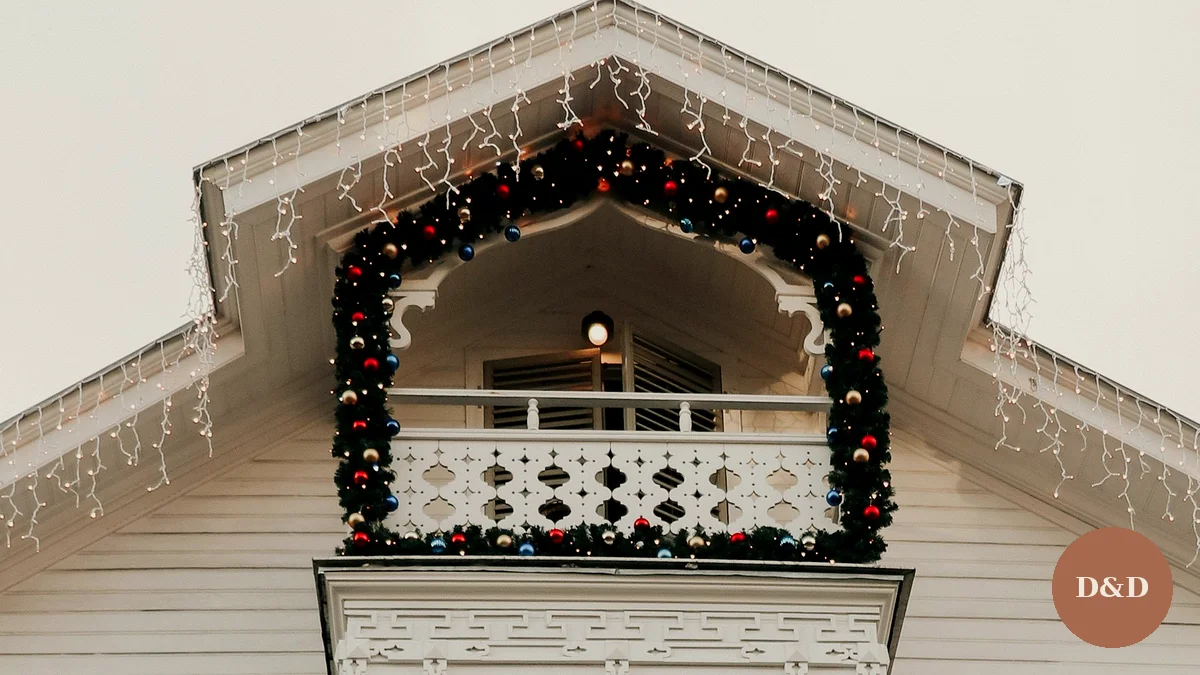
The idea: the roofline is what makes the house visible from the street at night. One clean run of lights along the roof edge, plus icicle strands hanging below it, gives the whole house its outline.
How to do it: one outdoor-rated warm-white string ($10–$15) clipped along the roofline with gutter or shingle clips, and one icicle strand run ($8–$12) hanging from the same clips. Icicle strands — shown here along a roofline — are the fastest way to make a plain facade look dressed: they add vertical movement that a single straight run cannot. Never use nails or staples on a roofline — they damage shingles and void light warranties. Keep to one color on the roofline even if the rest of the house is playful; the roofline is the frame, not the painting.
2. Indoor Tree Lights (Inside Out)

The idea: tree lights set the mood for the whole living room, and the difference between a good tree and a great one is depth — lights inside the branches, not just draped on the outside.
How to do it: start at the top near the trunk and work down and outward, placing some lights deep inside the branches and the rest on the tips. The rule of thumb is 100 mini lights per foot of tree height, but for a small tree 50–70 per foot looks better — sparse branches drown under dense lights. Warm white suits traditional decor and gold ornaments; multicolor suits a family tree with handmade ornaments. Our small Christmas tree guide covers which tree size fits which room before you light it.
3. Window Fairy and Curtain Lights

The idea: windows are the one display seen equally from inside and outside. Fairy lights around a window frame, or a curtain of hanging strands across a broad window, turn a plain window into a glowing focal point for the price of one string.
How to do it: one warm-white fairy-light string ($5–$8) draped around the frame of a narrow window, or one curtain-light panel ($10–$15) across a wide living-room window. Suction-cup hooks or adhesive clips hold both with no damage — the renter-friendly way to do windows. Battery-operated strings work where no outlet is near, but keep the battery box accessible or you will be moving furniture to switch them on.
4. Porch Railing and Pathway Lights

The idea: the porch is the welcome, and railing lights are what guests actually walk past. Wrapped railings plus a lit pathway say “come in” before anyone reaches the door.
How to do it: one outdoor-rated string ($8–$12) wrapped loosely around the porch railing, tied at the posts — the same railing our small porch formula dresses with garland. If your theme is multicolor, the railing is the place to use it: color on the railing reads playful from the street, while the roofline stays calm. Add solar pathway stakes ($10–$15 for a set) along the walk — no wiring, no outlets, they charge by day and glow by night. For the rest of the exterior, our Christmas outdoor zones plan the yard, windows, and seating around the same budget logic.
5. Mason Jar Fairy Lights (No Outlet Needed)

The idea: a jar full of fairy lights is the easiest indoor glow there is — no outlet, no installation, no commitment. One jar on a table, shelf, or mantel lights a whole corner like a lantern.
How to do it: one battery micro-light string ($4–$6) coiled inside a mason jar, glass vase, or lantern. The jar goes anywhere: a bookshelf, a bedside table, the center of a dining table as a centerpiece. Keep the battery box at the top of the jar, not buried at the bottom, or switching it on becomes a chore. This is also the best light idea for a second room — a $5 jar beats a second full display in every small home.
6. Mantel Garland Lights

The idea: after dark, the mantel needs a light source at eye level. A lit garland with candles does what overhead lighting cannot — it makes the living room feel warm instead of just bright.
How to do it: one lit garland ($10–$15) draped along the mantel, with battery candles instead of real flames near greenery. Battery candles are the right call here: no flame near dry garland, no wax, and a timer means the mantel lights itself at dusk. Our Christmas mantel guide builds the full three-layer mantel around this lit garland.
Hanging Lights Without Nails (Renter-Friendly)
Gutter clips for rooflines, shingle clips for edges, adhesive hooks for windows and walls, suction cups for glass, and zip ties for railings and garlands. Every one of these holds a full season, removes cleanly in January, and costs under $5 for a pack. The “how to hang Christmas lights without nails” question spikes every November for a reason — most people damage something the first time, and clips are the whole answer. Outdoor lights must be outdoor-rated, and any connection left in rain needs to stay off the ground and out of standing water.
Safety, Timers, and the LED Difference
LED strings use a fraction of the power of old incandescent strings and run cool enough to sit against greenery safely — but they still need the manufacturer’s clearance from fabric and paper. Put the whole display on one or two timers ($8–$12 each) so everything glows together at dusk and switches off at bedtime; timers also cut the electricity bill, which is the real cost of a big display. Check strings for frayed wires before hanging, never join more strings end-to-end than the box allows, and bring battery boxes indoors in heavy rain.
The – Shopping List
Roofline string ($10–$15) + icicle strand ($8–$12) + tree lights ($8–$12) + window fairy lights ($5–$8) + railing string ($8–$12) + mason jar micro-lights ($4–$6) + clips and a timer ($10–$15). Skip any one focal point and the display still works — but skip the plan, and no amount of lights will save it. Start with the roofline and the tree, add the rest one year at a time, and the display grows with your budget instead of against it.
Christmas Light FAQs
How many lights do I need for a Christmas tree?
About 100 mini lights per foot of height for a full tree, 50–70 per foot for a small or pencil tree. Count the tree’s height, not its width — height is what the rule is based on.
Warm white or cool white Christmas lights?
Warm white suits traditional decor, wood furniture, and gold accents. Cool white suits silver ornaments, glass, and snowy displays. Multicolor suits family spaces and handmade ornaments. Pick one and use it across all focal points.
How do I hang Christmas lights without nails?
Gutter clips for rooflines, shingle clips for edges, adhesive hooks for walls and windows, suction cups for glass, and zip ties for railings. All remove cleanly and cost under $5 a pack.
Can outdoor Christmas lights stay up in rain?
Outdoor-rated strings can — that is what the rating means. Keep connections off the ground, out of standing water, and under a cover where possible, and bring battery boxes indoors in heavy rain.
Should Christmas lights be on a timer?
Yes — one timer for the whole display means everything glows together at dusk and off at bedtime, and it cuts electricity use. Timers cost $8–$12 and pay for themselves in the first season.

Evelyn Marlowe is a home decor writer and small-space devotee covering budget-friendly decorating, rental-friendly upgrades, and seasonal styling — always with real prices and practical advice. Her rule: beautiful homes should be livable, not just photographable.
Related Stories
Christmas Tree Decor Ideas: 7 Cohesive Themes

Christmas Table Decor Ideas: 7 Budget Tablescapes