Small Christmas Tree Ideas for Compact Rooms
In this article
- The Small Tree Size Guide
- 1. The Pencil Tree in a Narrow Corner
- 2. The Tabletop Tree
- 3. A Group of Mini Bottlebrush Trees
- 4. The Potted Tree That Lives Past Christmas
- 5. Small Trees on the Mantel
- 6. The Mini Ornament Rule (Close Detail)
- Decorating Rules by Size
- The Budget Shopping List
- Small Christmas Tree FAQs
Quick answer: The best small christmas tree ideas start with size, not style: pencil trees (20–30 inches wide) for narrow corners, slim trees (30–40 inches) for small living rooms, tabletop trees (2–4 feet) for tables and mantels, and mini trees (under 2 feet) for shelves. Leave 6–12 inches between the topper and the ceiling, keep ornaments under 2.5 inches, and the tree fits the room instead of taking it over.
A full-size Christmas tree needs about 50 inches of floor width and a room that can spare it. Most small living rooms, apartments, and bedrooms cannot — and the usual advice is “just get a smaller tree,” as if all small trees were the same thing. They are not. A pencil tree, a tabletop tree, and a mini bottlebrush tree behave completely differently in a room, and picking the wrong one is how you end up with a tree that still crowds the sofa or looks lost on a shelf.
This guide fixes that by starting with size. Four tree types, what room each one actually fits, how to decorate each without making it look lumpy or bare, and what the whole thing costs on a budget.
The Small Tree Size Guide
Measure two things before you buy anything: the floor width you can spare, and the ceiling height where the tree will stand. The tree’s box height is not its finished height — add 6 inches for a topper and a stand, then leave 6–12 inches of air above that.
Pencil tree: 6–7.5 feet tall, only 20–30 inches wide. Full height, narrow footprint — best for corners, entryways, and the gap between two pieces of furniture.
Slim tree: 6–7 feet tall, 30–40 inches wide. The middle ground for a small living room that can give up a corner but not the middle of the room.
Tabletop tree: 2–4 feet tall, sits on a table, console, stool, or crate. No floor space at all — best for bedrooms, kitchens, and mantels.
Mini tree: under 2 feet, including bottlebrush and tiny potted trees. For shelves, counters, nightstands, and windowsills.
If even a pencil tree is too much floor, that is a different problem with a different answer — our Christmas tree alternatives for small spaces cover wall trees, ladder trees, and no-tree options.
1. The Pencil Tree in a Narrow Corner
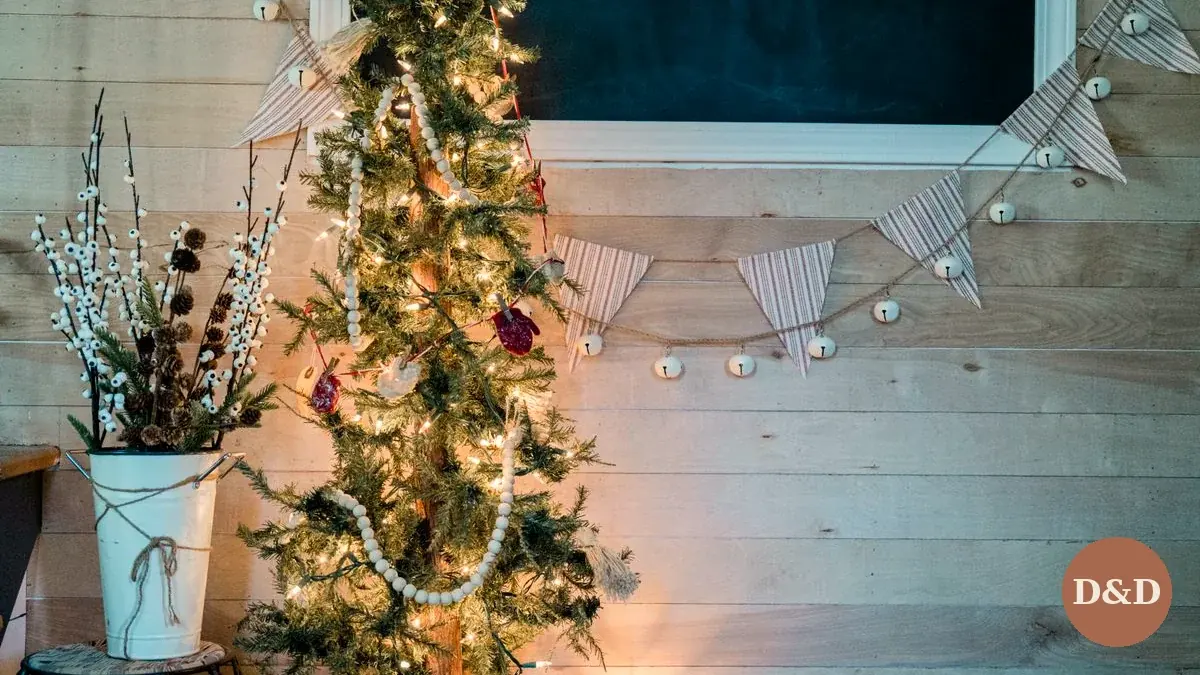
The idea: a pencil tree gives you a full-height Christmas tree in a footprint narrower than most armchairs. It is the single best small christmas tree idea for a room that has height but no width.
How to do it: a 6-foot pencil tree ($25–$40) tucked into a corner, with warm-white micro fairy lights and ornaments no bigger than 2.5 inches. Big ornaments are the classic pencil-tree mistake — they stick out past the branches and make the tree look lumpy. Run one ribbon in a spiral from top to bottom instead of draping garland; the spiral leads the eye up and makes the tree look taller. Finish with a basket or tree collar instead of a wide skirt, which would eat the very floor space you saved.
2. The Tabletop Tree
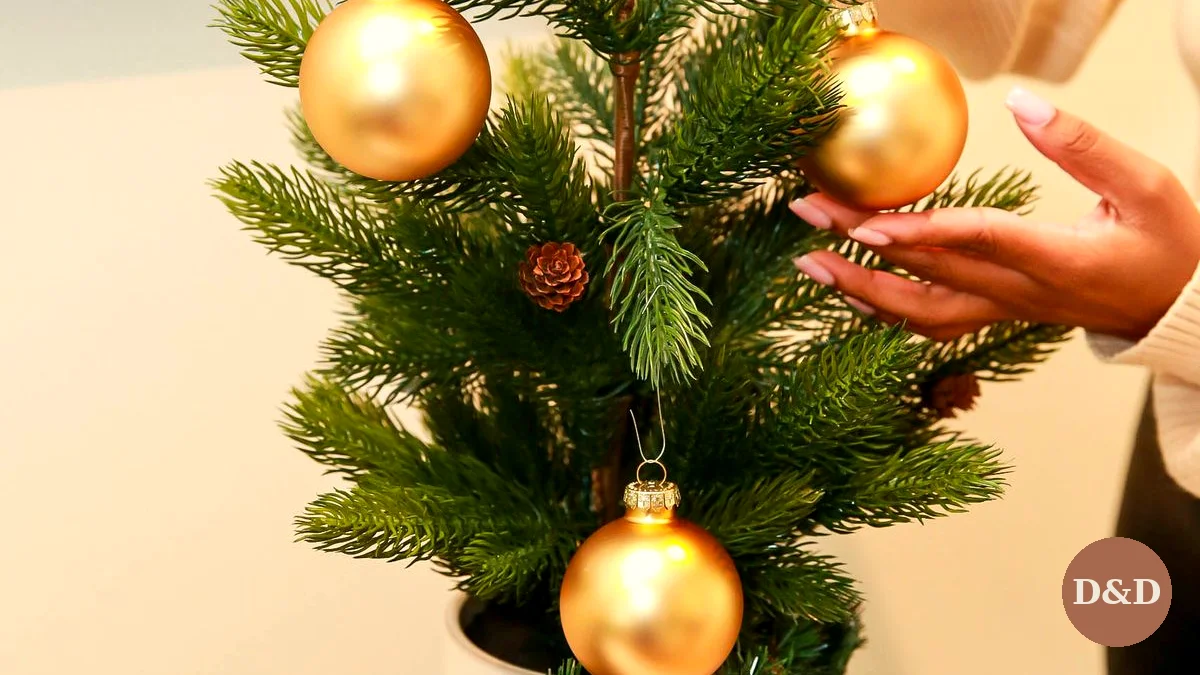
The idea: a tabletop tree is a real decorated tree that uses zero floor space. It works in a bedroom, on a kitchen counter, on a desk, or anywhere you can spare a square foot of table.
How to do it: a 2–3 foot tree ($15–$25) in a pretty pot, crock, or basket — the container does half the decorating, so don’t hide it under a skirt. Because you see a tabletop tree up close, detail matters more than on a floor tree: mini ornaments around 1 inch, one tight color palette (gold and cream, or red and white), and a battery fairy-light string so you don’t need an outlet nearby. Keep the ornament count low — twenty small ornaments on a 3-foot tree look full; forty look cluttered.
3. A Group of Mini Bottlebrush Trees
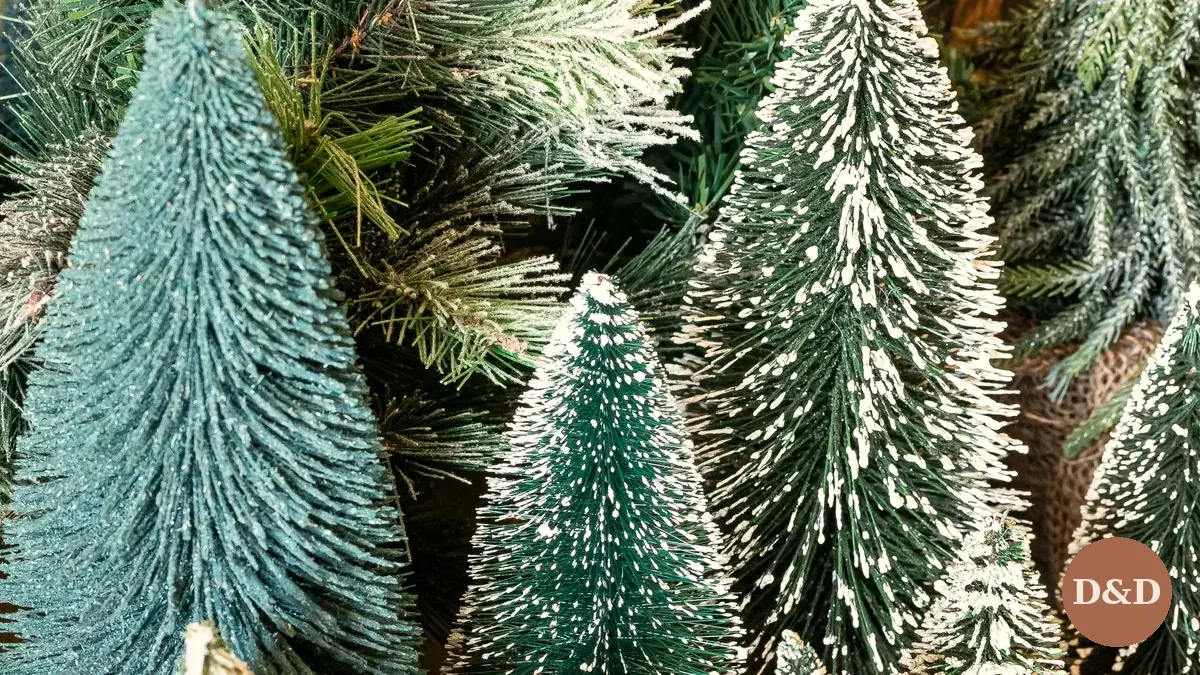
The idea: one mini tree can look lonely; a group of them looks like a display. Mixed heights of frosted mini trees on a shelf, console, or windowsill read as intentional decorating, not a leftover.
How to do it: three to five mini trees in different heights ($2–$5 each, or a set for $10–$15), grouped in odd numbers with the tallest at the back. Frosted or snowy finishes photograph well and match any color scheme; add a tiny string of micro lights woven through the group at night and the whole shelf glows. This is also the cheapest way to put Christmas in a second room — a $12 shelf group beats a second full tree in every small home.
4. The Potted Tree That Lives Past Christmas
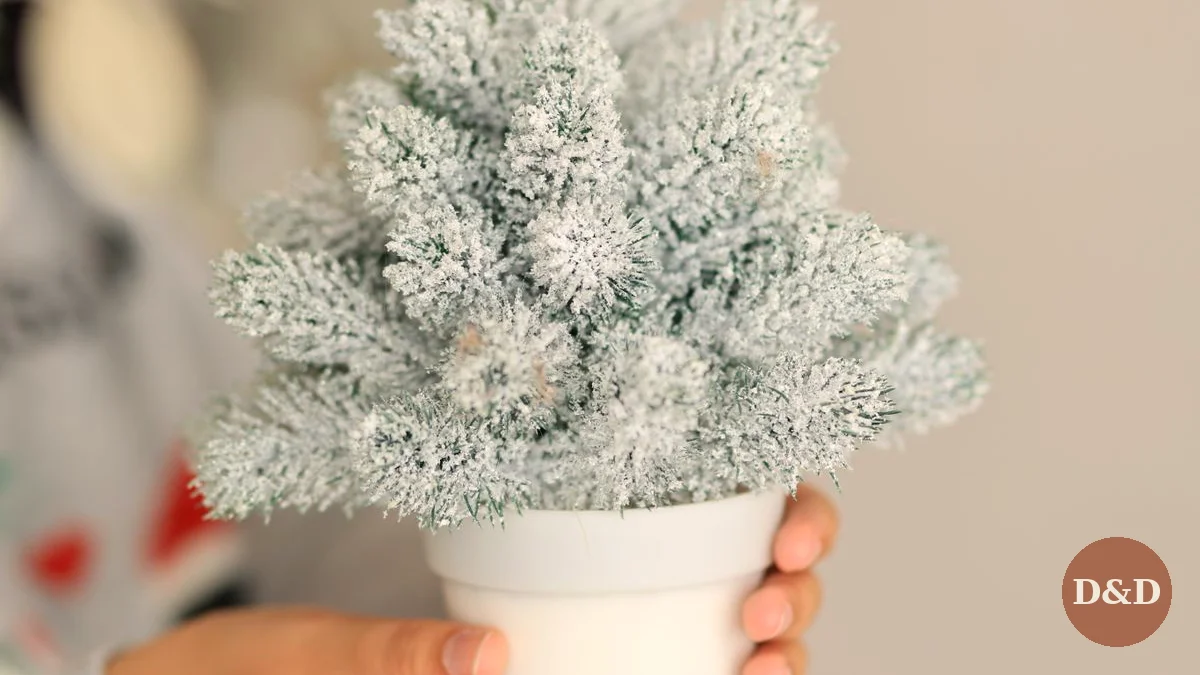
The idea: a small living evergreen in a white pot is a Christmas tree in December and a houseplant in January. Nothing gets thrown away, and the pot works in any room all year.
How to do it: a small potted spruce or fir ($12–$20) from a garden center, decorated with a handful of lightweight ornaments and one short fairy-light string. Keep decorations light — a living tree’s branches are thinner than an artificial tree’s, and heavy ornaments drag them down. Water it through December, keep it away from radiators, and after the holidays it moves to a bright spot as a houseplant. The same logic works outside too: our small porch formula uses a potted tree as its one vertical accent.
5. Small Trees on the Mantel

The idea: the mantel is the one place in the living room where small trees look grand, because the mantel itself is the display shelf. Two small gold trees with garland turn a plain mantel into the room’s focal point.
How to do it: a pair of small trees ($8–$15 each) at the ends of the mantel, with garland draped between them and the stockings below. Keep the trees well inside the mantel’s edges — if a tree overhangs the mantel edge, it looks like it might fall. Battery lights keep the mantel wire-free. If your mantel is the whole display, our Christmas mantel decor guide builds the full three-layer mantel around pieces like these.
6. The Mini Ornament Rule (Close Detail)

The idea: small trees fail when they wear full-size decorations. The rule is simple: ornaments should be roughly one-tenth the height of the tree or smaller, and every ornament should be light enough to hang from a single branch tip without bending it.
How to do it: for a 3-foot tree, ornaments around 1 inch; for a 6-foot pencil tree, up to 2.5 inches; for minis, tiny balls, wooden beads, and paper stars. Hang special ornaments at eye level facing outward, fill gaps with plain balls in one or two colors, and skip tinsel — it overwhelms small branches. A small tree with ten well-chosen ornaments looks better than a small tree buried under fifty.
Decorating Rules by Size
Lights: micro fairy lights for minis and tabletops (one 20-light string is plenty), standard mini lights for pencil and slim trees (100 lights per foot of height is the usual rule, but for a pencil tree, 50–70 per foot looks better because the branches are sparse).
Color: one tight palette per tree — two colors plus metallics. Small trees show color chaos faster than big ones.
Topper: a small star or bow, never a large angel or heavy topper — on a pencil tree, a heavy topper can bend the top sideways.
Skirt vs collar: collars and baskets for pencil and slim trees (they save floor); nothing at all for tabletops and minis (the pot is the base).
The Budget Shopping List
$25 shelf display: a set of mini bottlebrush trees ($10–$15) + micro lights ($5) + a few mini ornaments you already own.
$50 tabletop tree: 3-foot tree ($15–$25) + battery fairy lights ($5–$8) + mini ornament set ($10–$15) + a pot or basket you already own.
$75 pencil tree: 6-foot pencil tree ($25–$40) + micro lights ($10) + small ornaments ($15–$20) + a collar ($8–$12). One tree, full height, less floor than an armchair — the best value small christmas tree idea for a small living room.
Whichever size you pick, the rule that matters most is the one at the top: measure first, buy second. A tree that fits its spot needs half the decorating to look finished.
Small Christmas Tree FAQs
What size Christmas tree is best for a small apartment?
A 6-foot pencil tree if you have a free corner, or a 2–3 foot tabletop tree if you have no free floor at all. Both give a full decorated-tree look without taking over the room.
What is the difference between a pencil tree and a slim tree?
Width. A pencil tree is 20–30 inches wide; a slim tree is 30–40 inches wide. Same height, different footprint — measure your corner before choosing, because 10 inches is the difference between fitting and crowding.
How many lights do I need for a small Christmas tree?
About 50–70 mini lights per foot for a pencil tree, one 20-light micro string for a tabletop or mini tree. Fewer, well-spaced lights look better on sparse small branches than a dense wrap.
Real or artificial for a small tree?
Artificial for pencil, slim, and tabletop trees (consistent shape, reusable, no needles in a small room). Living potted trees for the mini size, where the tree becomes a houseplant after Christmas.
Where should I put a small Christmas tree?
Corners for pencil trees, tables and mantels for tabletops, shelves and windowsills for minis. The one place to avoid is the middle of a walking path — even a small tree in a doorway feels like clutter.
Related: Once you choose the right slim or tabletop footprint, follow our lights-to-topper steps in 7 Christmas tree decor ideas that look expensive.

Evelyn Marlowe is a home decor writer and small-space devotee covering budget-friendly decorating, rental-friendly upgrades, and seasonal styling — always with real prices and practical advice. Her rule: beautiful homes should be livable, not just photographable.
Related Stories
Christmas Tree Decor Ideas: 7 Cohesive Themes
Christmas Table Decor Ideas: 7 Budget Tablescapes