Christmas Garland Ideas: 6 Places to Hang It Full
In this article
- 1. Mantel Garland: The Classic Spot, Done Properly
- 2. Staircase Banister Garland: The Showstopper
- 3. Doorway Garland: Frame the Entrance
- 4. Window Garland: Free Display Space You Already Own
- 5. Table Runner Garland: A Centerpiece That Runs the Whole Table
- 6. How to Make Garland Look Full (Even a Cheap One)
- Garland Budget Plans: What to Spend
- Frequently Asked Questions
- How do I make Christmas garland look better?
- What is the most realistic looking Christmas garland?
- What are some easy garlands I can make?
- How much garland do I need for stairs?
- Can I hang garland without nails?
- Where will you hang your garland first?
If you buy one Christmas decoration this year, make it garland. These christmas garland ideas cover the five places garland actually earns its keep, how many feet each spot needs, what to spend, and how to make a thin garland look full. Most garland guides show you pretty pictures and stop there. This one starts with a tape measure, because the number one reason garland looks disappointing is simple: not enough of it, hung flat, with no lights woven in.
Garland is also the most forgiving Christmas decoration you can buy. Unlike a tree, it fits any home, any budget, and any style — traditional, minimal, rustic, or glam. And unlike a wreath, one garland can dress a whole staircase or run a whole table. Work through the five placements below, pick the ones your home actually has, and skip the rest.

A staircase banister wrapped in evergreen garland — the single highest-impact place to hang garland.
1. Mantel Garland: The Classic Spot, Done Properly
The idea: The mantel is where most people hang garland first, and where most garland looks thinnest — because one short strand gets stretched across a wide mantel and left flat.
How to do it: Measure your mantel width first, then add 12 to 24 inches on each side so the ends can drape down gracefully instead of stopping dead at the edge. Start with lights: weave a battery LED strand through the garland before you hang it, so the glow comes from inside the greenery. Hang the garland with removable adhesive hooks on the mantel top or underside — never nails in wood trim. Finish by tucking in ribbon, pinecones, or dried orange slices. Keep garland at least 12 inches from any open flame or heat source, and use LED candles only near greenery. For more mantel styling, see our Christmas mantel decor ideas.
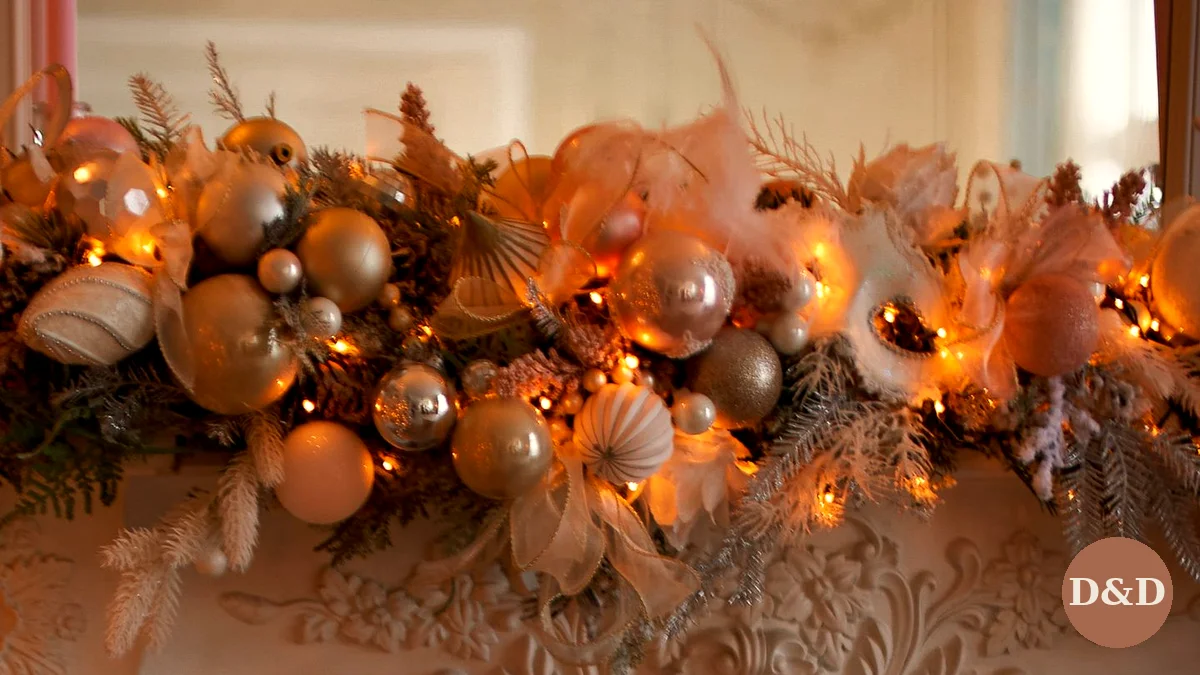
Mantel garland needs extra length on each side so the ends drape instead of stopping at the edge.
2. Staircase Banister Garland: The Showstopper
The idea: A garland-wrapped banister turns your whole entryway into a Christmas scene, and guests see it from the front door. It is also the placement where measuring matters most.
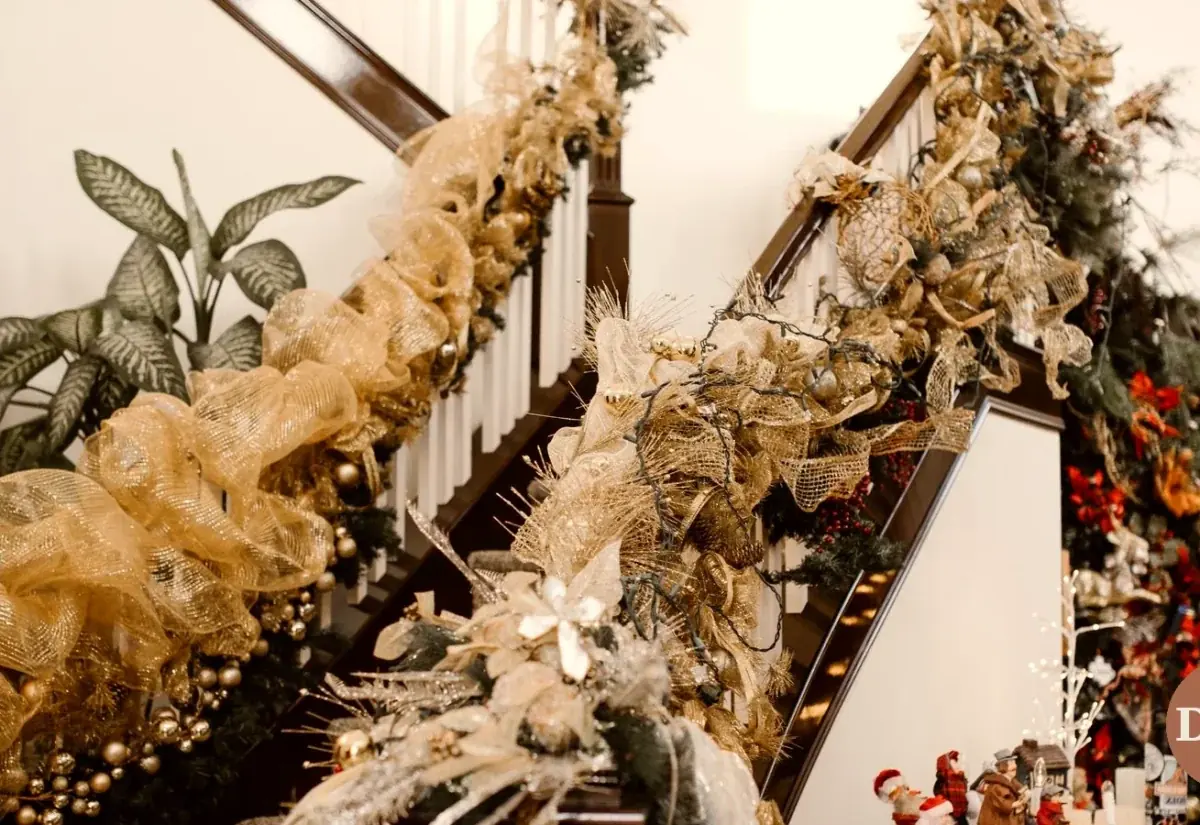
How to do it: Measure your railing length, then multiply by 1.5. That is the rule of thumb for swags: a 12-foot railing needs about 18 feet of garland, because every dip between attachment points eats length. Attach the garland with floral wire or zip ties every 12 to 18 inches, with the ties hidden underneath the foliage. Keep the handrail grip itself clear — decorations should sit below or beside the grip line, never wrapped around the part hands hold, so the stairs stay safe to use. Use battery LED lights so no cord crosses the steps. Finish the bottom newel post with the biggest bow in the house; it anchors the whole staircase.
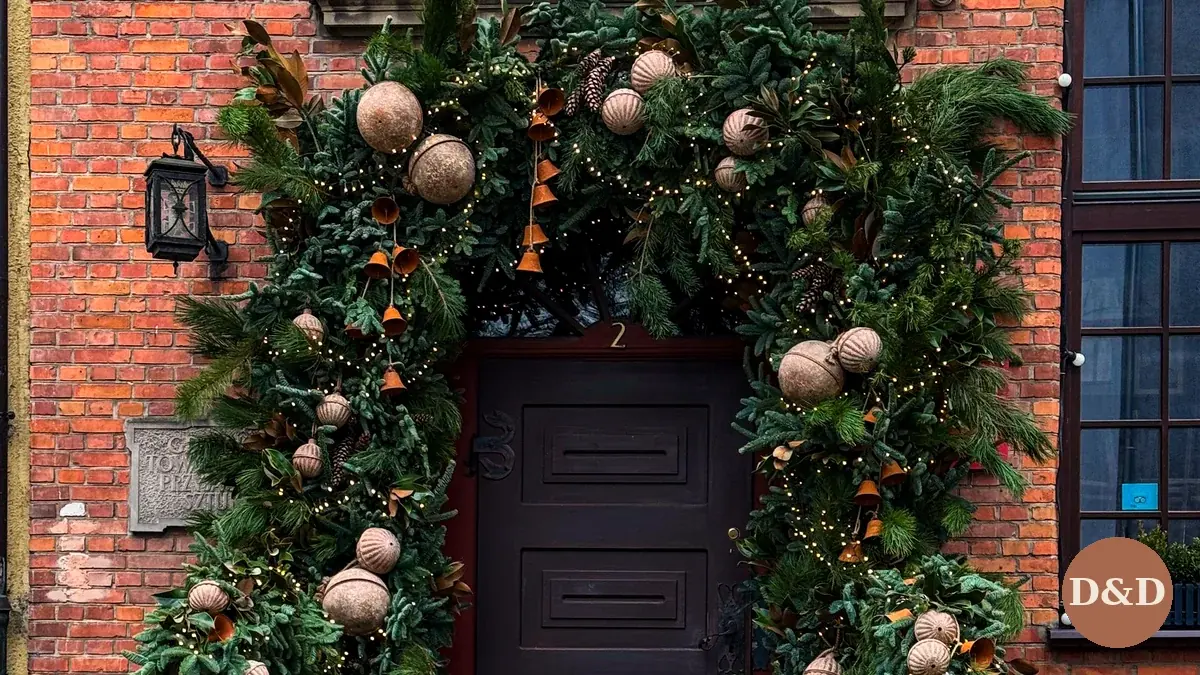
A doorway swag frames the entrance — keep it clear of the door swing and the lock.
3. Doorway Garland: Frame the Entrance
The idea: A swag across the top of a door frames the entrance and welcomes guests before they even step inside. It works on front doors, interior doorways, and wide archways.
How to do it: For an interior doorway, use a tension rod inside the frame or two removable hooks above the trim — no holes in the woodwork. Hang one swag across the top for a simple look, or run garland down both sides as well for a full frame. For a front door, choose outdoor-rated garland and battery lights, and check that the garland clears the door swing and the lock. Pair a doorway swag with a wreath on the door itself for a finished entrance; our Christmas wreath ideas cover wreaths for every door. Outdoor doorways pair well with our Christmas porch decor ideas.
4. Window Garland: Free Display Space You Already Own
The idea: Windows are free display space, visible from inside and outside, and garland frames them beautifully without blocking the room.
How to do it: Frame the window — top and sides — rather than covering the glass. Use suction-cup hooks on the glass or removable hooks on the trim, so nothing damages paint or wood. Keep the center of the glass clear so daylight still comes in during the day; the garland is a frame, not a curtain. Weave in a warm-white LED strand for the evening glow, and coordinate the window garland with your other lights for one cohesive look — see our Christmas light ideas for the no-nails lighting plan.

Garland along a window sill with warm lights — keep the glass clear so daylight still comes in.
5. Table Runner Garland: A Centerpiece That Runs the Whole Table
The idea: One garland down the center of the table beats a single centerpiece, because it dresses the whole table length and ties every place setting together.
How to do it: Run the garland down the center of the table and let the ends drape slightly over each end. Layer in ornaments, pinecones, or a few sprigs of eucalyptus for texture. Keep the garland low so guests can see each other across the table, and keep it at least 12 inches from any heat source. Never use real-flame candles near greenery — LED candles give the same glow with none of the risk. A table runner garland also works beautifully with the small-space approach in our small living room Christmas decor ideas.

A garland table runner dresses the whole table — keep it low and use LED candles only.
6. How to Make Garland Look Full (Even a Cheap One)
The idea: Thin garland looks thin because the branches lie flat in the box. Ten minutes of fluffing before you hang it changes everything.
How to do it: Before hanging, pull every branch outward, upward, and downward until the garland looks twice as thick — this is the single highest-impact step, and most people skip it. If one garland still looks sparse, twist two thin garlands together; two cheap garlands layered beat one expensive garland left flat. Weave ribbon through the garland for color, and add picks — berries, pinecones, dried orange slices — to fill gaps. When buying, look for PE (polyethylene) tips over flat PVC: molded, three-dimensional needles look far more realistic, and a higher tip count means a fuller garland. Pre-lit garland saves the light-weaving step; unlit garland lets you choose your own light color and replace a dead strand without replacing the garland.

Hands arranging fresh fir branches — arranging and fluffing greenery is what makes garland look full.
Garland Budget Plans: What to Spend
Garland fits any budget, but the budget decides how many placements you can dress. Plan your spend by placement, not by impulse.
| Budget plan | What it covers | Best for |
|---|---|---|
| $0 | Paper chain, dried-orange, or foraged-green garland plus lights you already own | Kids’ rooms, classrooms, a first test |
| $25 | One 9-foot faux garland, unlit | A single mantel or doorway |
| $50 | Garland plus a battery LED strand, ribbon, and picks | Mantel and stairs starter set |
| $150 | Pre-lit premium garland plus a second garland and full dressing | Whole entryway: stairs plus door |
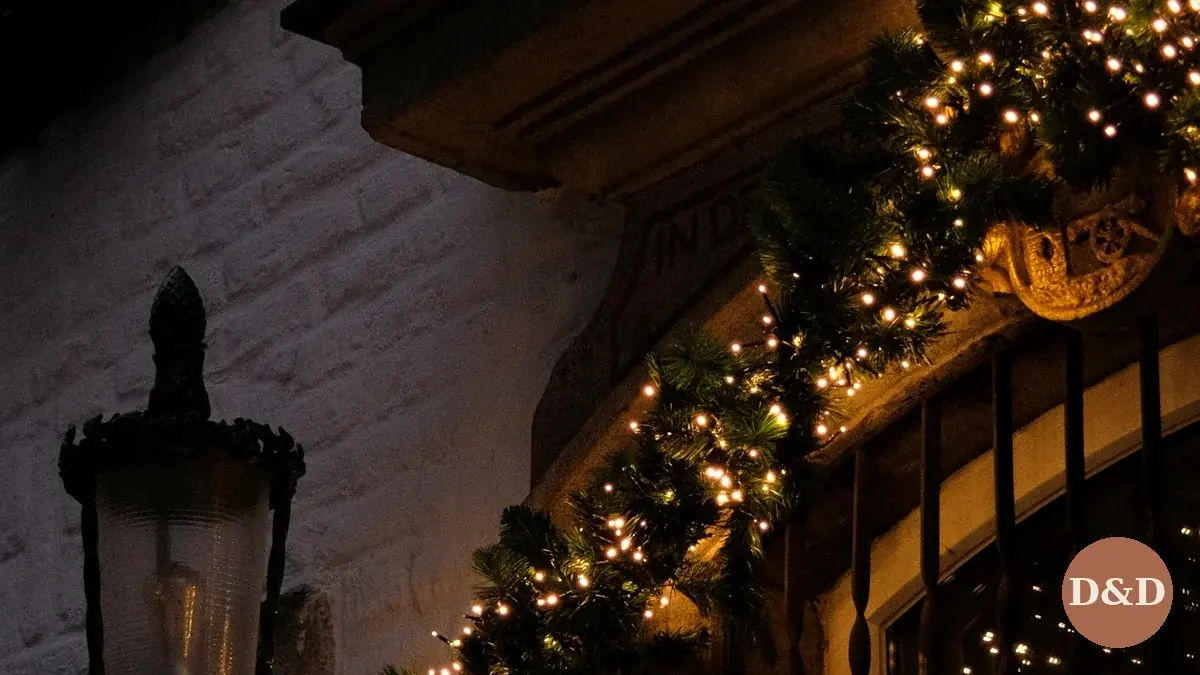
Pre-lit garland glowing in the evening — lights woven in before hanging make the difference.
Frequently Asked Questions
How do I make Christmas garland look better?
Fluff it first — pull every branch outward before hanging. Then layer: weave lights through before hanging, add ribbon, and tuck in picks like berries or pinecones to fill gaps. A fluffed, lit, layered garland looks twice as expensive as the same garland hung straight from the box.
What is the most realistic looking Christmas garland?
Look for PE (polyethylene) tips — molded, three-dimensional needles — rather than flat PVC, and check the tip count: more tips means a fuller, more realistic garland. Mixed greens (fir with pine or cedar sprigs) also look more natural than a single flat green.
What are some easy garlands I can make?
Paper chains, dried orange slices strung on twine, and popcorn-and-cranberry garlands are the easiest DIY options, and all three cost almost nothing. They work best on trees, mantels, and doorways rather than staircases, where a sturdier faux garland holds up better.
How much garland do I need for stairs?
Multiply your railing length by 1.5. A 12-foot railing needs about 18 feet of garland, because swags between attachment points use extra length. Measure the railing before you buy, and buy one length rather than joining short pieces mid-swag.
Can I hang garland without nails?
Yes. Removable adhesive hooks hold mantel and doorway garland, tension rods work inside door frames, floral wire or zip ties secure banister garland, and suction-cup hooks hold window garland. Everything in this guide hangs without a single nail.
Where will you hang your garland first?
Start with the placement you see most — usually the mantel or the staircase — and measure it today. One well-measured, well-fluffed garland beats three thin ones hung in a hurry, and it is the fastest way to make your whole home feel like Christmas.

Evelyn Marlowe is a home decor writer and small-space devotee covering budget-friendly decorating, rental-friendly upgrades, and seasonal styling — always with real prices and practical advice. Her rule: beautiful homes should be livable, not just photographable.
Related Stories
Christmas Tree Decor Ideas: 7 Cohesive Themes

Christmas Table Decor Ideas: 7 Budget Tablescapes