Small Closet Organization Ideas: 6 Space-Saving Ways
In this article
- 1. Make Your Rods Work Harder
- 2. Put Matching Boxes on the Top Shelf
- 3. Hang a Pocket Organizer for the Small Stuff
- 4. Add a Drawer Unit Between Hanging Sections
- 5. Switch to Matching Slim Hangers
- 6. Give Shoes a Home at the Bottom
- Small Closet Organization Ideas on a Budget
- Mistakes That Make Small Closets Feel Smaller
- Reach-In Closet Measurements & Capacity Math
- The 15-Minute Quarterly Reset (So Clutter Never Rebuilds)
- FAQs
- How do you organize a really small closet?
- What is the best way to double closet space?
- How do you organize a closet with no drawers?
- How many clothes should a small closet hold?
Small closet organization ideas are not about buying more containers. They are about giving a small space a clear system, so getting dressed stops feeling like digging through a pile. A tiny closet can hold a surprising amount once the rods, shelves, drawers, and floor each do one job well. These six ideas work in reach-in closets, rentals, and shared closets alike, and none of them needs a renovation.
1. Make Your Rods Work Harder

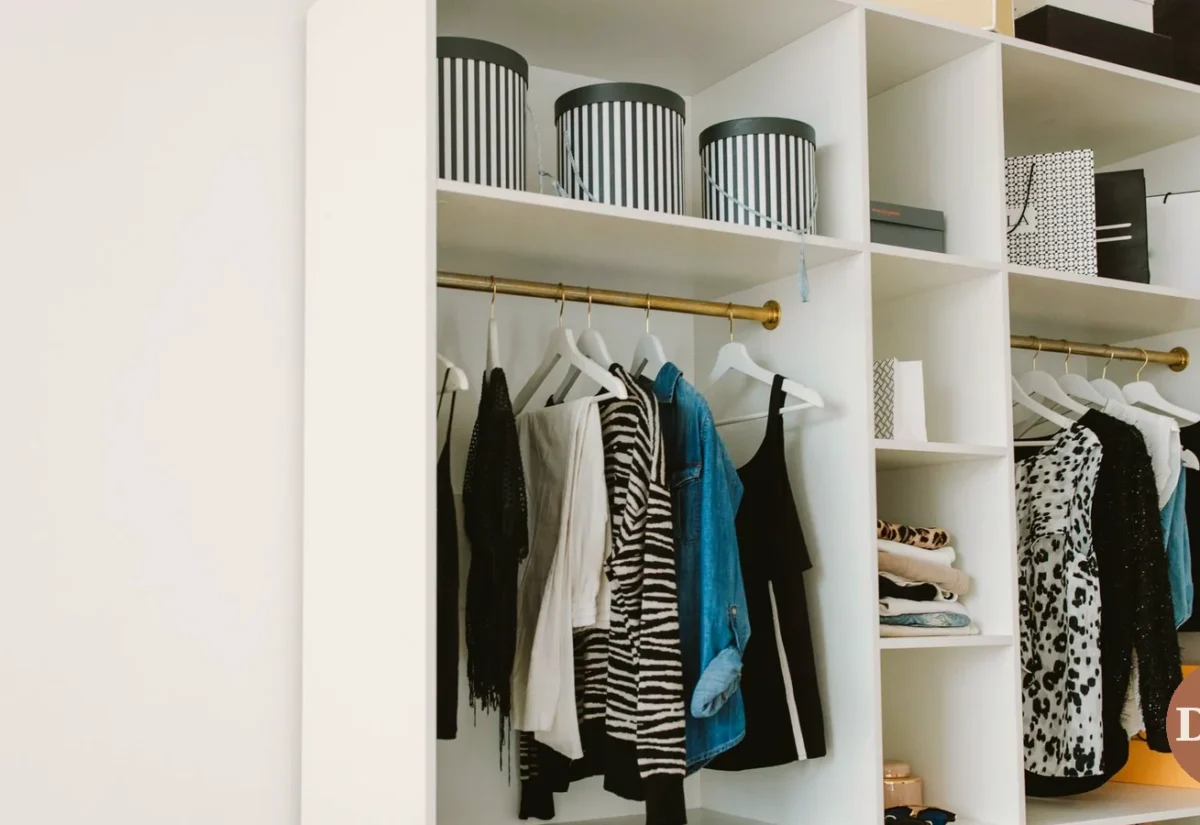
A tidy rod section with matching hangers and shelf space above.
The idea: Most closets waste rod space because long and short clothes hang side by side. Sort by length and the rod suddenly fits more.
How to do it: Hang short items — shirts, blouses, folded trousers — on one rod, and long items — dresses, coats — on another section. If your rod is a single long one, a second lower rod for shirts and tops (a double-hang setup) roughly doubles hanging space for short clothes. Leave a little breathing room between garments so you can actually pull one out without disturbing the rest.
2. Put Matching Boxes on the Top Shelf

Matching storage boxes on the top shelf keep rarely used items out of sight.
The idea: The top shelf is the hardest to reach, so it should hold the things you need least — and matching boxes make it look calm instead of cluttered.
How to do it: Use boxes that are all the same size and color so the shelf reads as one tidy row. Put seasonal clothes, spare bedding, or occasion wear up there, and label the boxes if you want to find things fast. Keep everyday items off the top shelf entirely.
3. Hang a Pocket Organizer for the Small Stuff

A hanging pocket organizer keeps small accessories visible and off shelves.
The idea: Sunglasses, belts, scarves, and small accessories disappear in drawers and pile up on shelves. Clear pockets keep them visible and use vertical space that is otherwise wasted.
How to do it: Hang a pocket organizer on a rod or a door and give each pocket one category — one row for sunglasses, one for belts, one for scarves. Because you can see everything at a glance, you stop buying duplicates of things you already own.
4. Add a Drawer Unit Between Hanging Sections
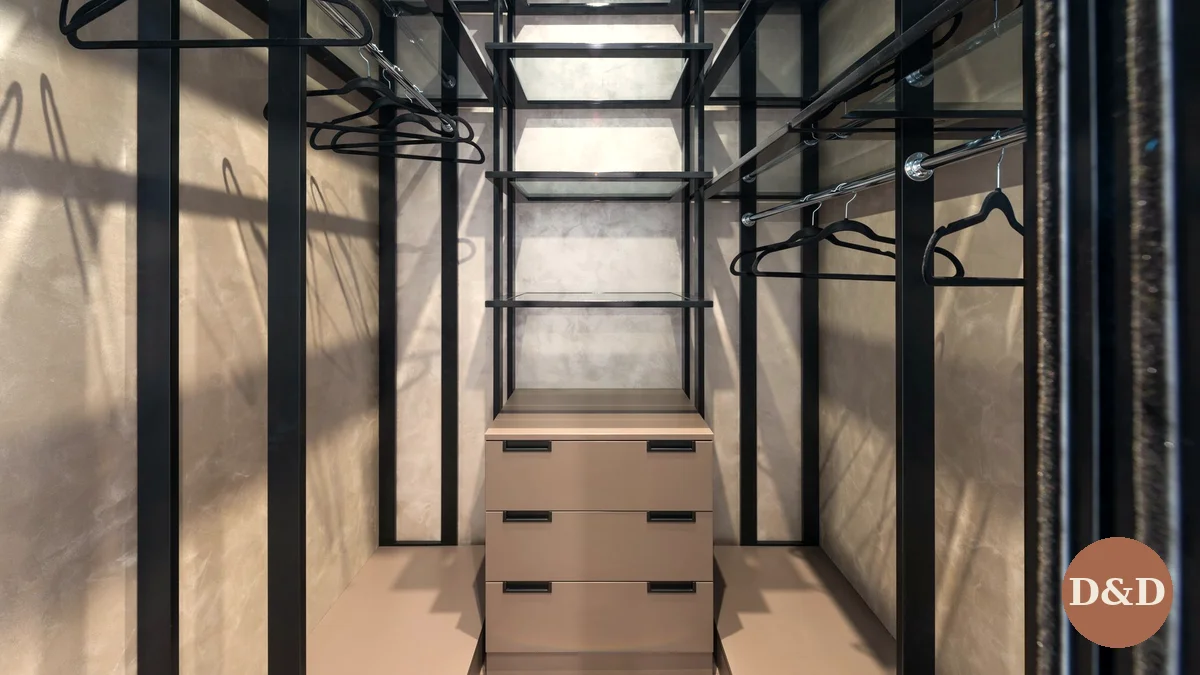
A drawer unit between hanging sections adds folded storage without a remodel.
The idea: Folded clothes stacked on open shelves always topple. Drawers keep the same clothes contained and easy to reach.
How to do it: Place a small drawer unit in the middle or at the end of the hanging run — wherever there is a gap between hanging sections. Use the top drawer for underwear and socks, the middle for tees, and the bottom for heavier knits. A freestanding unit works in rentals because nothing needs to be screwed into the wall.
5. Switch to Matching Slim Hangers
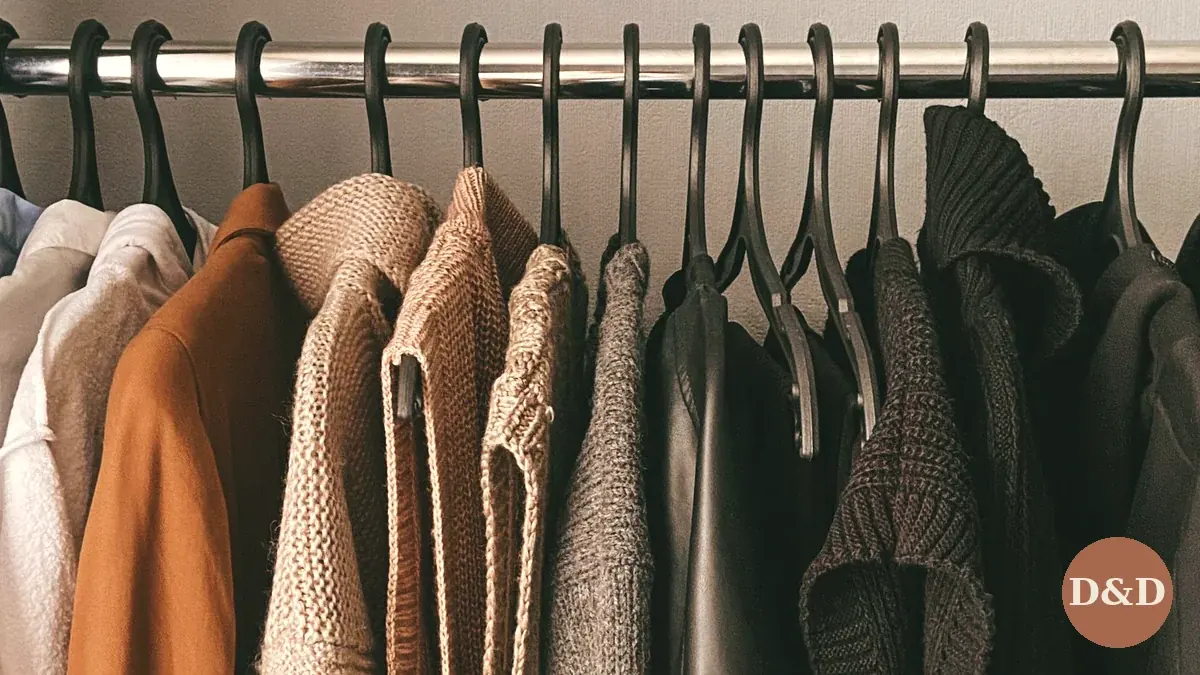
Matching slim hangers and a light-to-dark order make a full rod look calm.
The idea: Bulky mixed hangers eat inches on every rod. One slim hanger type gives every garment the same width and makes the whole closet look intentional.
How to do it: Replace mixed plastic, wire, and wooden hangers with one slim type. Then hang clothes in a light-to-dark color order within each category. The color gradient is not just pretty — it helps you find a specific sweater or shirt in seconds.
6. Give Shoes a Home at the Bottom
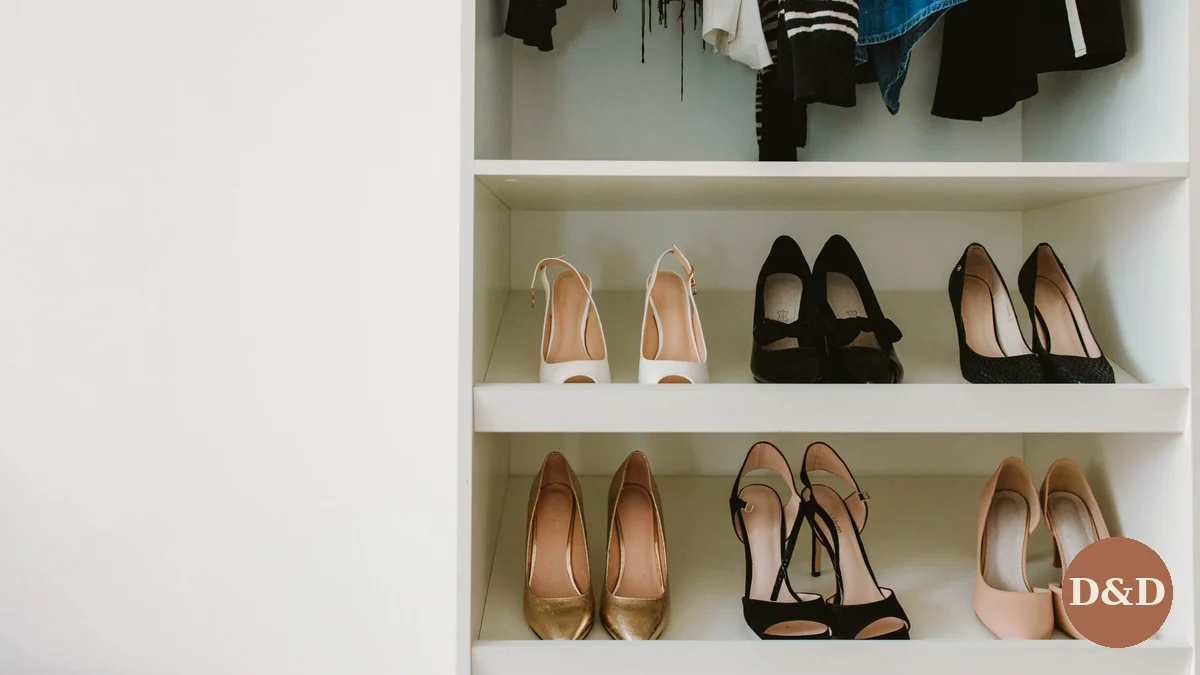
Lower shelves keep heels visible and off the closet floor.
The idea: Shoes dumped on the closet floor become a pile you trip over. Low shelves or a small rack turn the floor zone into real storage.
How to do it: Keep only the shoes you wear weekly in the closet, lined up in pairs on low shelves or a rack under the hanging clothes. Store out-of-season pairs in boxes on the top shelf instead. One pair per slot is the rule that stops the pile from coming back.
Small Closet Organization Ideas on a Budget
You do not need a full closet system to get organized. Plan by zone, not by shopping list, and buy in this order:
| Planning band | What it covers |
|---|---|
| Under $25 | Matching slim hangers, a few hooks, one hanging pocket organizer |
| $25–$75 | Matching top-shelf boxes, a shoe rack, shelf dividers |
| $75 and up | A drawer unit, a double-hang rod kit, a full matching set |
Start with the cheapest band first. If the closet still feels full after hangers and an organizer, then spend on the bigger pieces — not before.
Mistakes That Make Small Closets Feel Smaller
- Buying organizers before decluttering. Containers organize what you keep; they cannot fix keeping too much. Declutter first, then measure, then buy.
- Mixed hangers. Different hanger shapes and widths waste rod space and make the closet look chaotic even when it is tidy.
- The floor pile. Anything without a home ends up on the floor. Give shoes, bags, and laundry each one fixed spot.
- No zones. When work clothes, gym clothes, and occasion wear mix together, every morning starts with a search. Keep categories together.
For the mistakes angle in more detail, see our small closet mistakes that waste half your space — it pairs well with these ideas. More storage thinking: small pantry organization ideas and under stairs storage ideas use the same zone-by-zone method in other tight spaces.
Reach-In Closet Measurements & Capacity Math
Organizing products only stay neat when they physically fit inside standard US closet dimensions. Most reach-in closets measure 24 inches deep with doors that hide the side 6 to 8 inches on either end. Measuring those clearances prevents buying bins whose lids hit sliding door tracks:
| Closet Zone | Standard Depth / Clear Space | Best-Fit Organizer Spec | Estimated Capacity Gain |
|---|---|---|---|
| Hanging rod clearance | 24″ deep; 40″ drop for shirts, 65″ for coats/dresses | 17″ slim velvet hangers + expandable second lower rod | +45% to +80% shirt & pant hanging capacity |
| Top shelf boxes | 12″–14″ deep above rod; 16″+ height to ceiling | Matching 11″×14″ lidded linen or clear label bins | Eliminates toppling sweater piles on upper wire shelves |
| Lower floor zone | 12″ deep × full closet width under short-hang rod | Two-tier stackable metal/wood shoe rack (holds 8–12 pairs) | Frees floor space & keeps pairs visible at a glance |
| Back of hinged door | 5″–6″ clearance when door swings shut | 16-pocket breathable mesh over-door organizer | Holds 8 pairs of flats/sandals or rolled scarves & belts |
The 15-Minute Quarterly Reset (So Clutter Never Rebuilds)
Keep one lightweight collapsible donation bag permanently on the floor in the right corner of your closet. Every time you try something on and take it back off because it pinches, itches, or sits unworn for two seasons, drop it straight into that bag on the spot — once the bag fills up, donate it and replace nothing unless another piece rotates out.
FAQs
How do you organize a really small closet?
Empty it completely, keep only what you wear regularly, then rebuild it in zones: rods for hanging, top shelf for matching boxes, a drawer unit for folded clothes, and the bottom for shoes. One job per zone is what keeps a tiny closet usable.
What is the best way to double closet space?
Add a second lower rod for short clothes — the double-hang trick — and switch to slim matching hangers. Together, these two changes usually free more space than any new piece of furniture.
How do you organize a closet with no drawers?
Use a freestanding drawer unit between hanging sections, or hanging shelves plus a pocket organizer for small items. The goal is the same: folded things need containment, or they topple.
How many clothes should a small closet hold?
There is no fixed number — the test is whether you can see and reach everything without moving three things first. If you cannot, something needs to go. A one-in, one-out rule keeps it that way.

Evelyn Marlowe is a home decor writer and small-space devotee covering budget-friendly decorating, rental-friendly upgrades, and seasonal styling — always with real prices and practical advice. Her rule: beautiful homes should be livable, not just photographable.
Related Stories
How to Hang Curtains Without Drilling: 5 Renter Hacks Tested (Up to 25 lbs)
How to Cover a “Boob Light” in a Rental: 5 Under-$35 Fixes (No Wiring)